Searching for a knee surgeon near me usually happens after months of trying everything else. You’ve adjusted your activity. You’ve tried physiotherapy. You’ve taken painkillers. You’ve maybe even tried injections. And now, with the pain still affecting your daily life, you’re ready to talk to a surgeon — but who, exactly? In a city the size of Bengaluru, the options are endless and the marketing is overwhelming. This guide is built to help you navigate that decision with clarity.
A knee surgeon isn’t just someone who operates on knees. They’re a long-term partner in helping you recover full mobility, comfort, and confidence. Choosing well makes a real difference — not just for the surgery itself but for the years that follow.
What Does a Knee Surgeon Actually Do?
Modern knee surgeons treat a wide range of conditions:
- Knee arthritis — osteoarthritis, rheumatoid arthritis
- Sports injuries — ACL, MCL, meniscal tears
- Cartilage damage — focal defects, osteochondritis dissecans
- Patellar problems — instability, tendinitis, dislocations
- Knee deformities — bow leg, knock-knee
- Knee fractures — tibial plateau, patellar
- Bursitis and tendinitis
- Failed prior knee surgeries (revision cases)
- Pediatric knee conditions
Their tools range from simple lifestyle and physiotherapy advice to complex joint replacement.
Why Near Me Matters Less Than You Think
Convenience matters — but for surgery, the right surgeon is more important than the closest one. A 30-minute drive to a senior, experienced surgeon at a well-equipped hospital almost always beats a 5-minute walk to an under-resourced clinic. That said, in Bengaluru, you don’t usually have to choose between proximity and quality. Several excellent knee specialists practice in well-distributed locations, including Ananya Hospitals.
What to Look for in a Knee Surgeon
1. Sub-Specialty Focus on Knees
Modern orthopaedics is increasingly specialised. A surgeon whose practice centres around knees — joint replacement, arthroscopy, and complex knee reconstruction — typically delivers better outcomes than one who handles knees as just one of many areas.
2. High-Volume Surgical Practice
A surgeon performing 200 knee replacements a year develops finer technical skill, smoother teamwork, and more reliable results than one performing 20.
3. Fellowship Training
Look for additional training beyond the standard orthopaedic residency — joint replacement fellowships, sports medicine fellowships, or arthroscopy training abroad.
4. Conservative-First Approach
The best knee surgeons don’t push surgery as the first answer. They:
- Ensure physiotherapy has been adequately tried
- Offer injections when appropriate
- Reserve surgery for clear, evidence-based indications
- Discuss realistic outcomes honestly
5. Clear Communication
You should leave a consultation with:
- A clear understanding of your diagnosis
- Knowledge of treatment options
- Realistic expectations
- Cost in writing
- A defined recovery timeline
6. Strong Hospital Backing
Even the best knee surgeon needs a strong supporting team — anaesthesia, nursing, physiotherapy, and post-op coordinators. The hospital matters as much as the surgeon.
The Mayo Clinic resource on knee surgery provides a detailed framework for evaluating knee care options.
Common Knee Procedures Worth Knowing
1. Knee Arthroscopy
Keyhole surgery using small portals, a camera, and tiny instruments. Used for:
- Meniscal tears
- Cartilage damage
- Loose bodies
- Synovial tissue problems
- Some ligament injuries
Day-care or 1-day stay. Return to office work in 1–2 weeks.
2. ACL Reconstruction
For complete tears of the anterior cruciate ligament. Done arthroscopically using a graft from your own body. Recovery to sport: 6–9 months.
3. Partial Knee Replacement
For arthritis confined to one compartment of the knee. Replaces only the worn-out part. Faster recovery than total replacement.
4. Total Knee Replacement
For advanced bone-on-bone arthritis. Resurfaces the entire knee joint. Modern implants typically last 15–25 years.
5. Knee Replacement with Computer Guidance
Technology-assisted procedures for improved alignment precision. Useful in selected complex cases.
6. Revision Knee Surgery
For failed prior knee replacements or persistent problems after surgery. Technically demanding — should be done by surgeons specifically experienced in revision cases.
When to See a Knee Surgeon
Consider an orthopaedic consultation if you experience:
- Knee pain lasting more than 6 weeks
- Difficulty walking, climbing stairs, or standing up
- A “giving way” or instability sensation
- Locking — knee won’t bend or straighten
- Persistent swelling
- Significant deformity
- Previous knee surgery with returning symptoms
- Pain disturbing your sleep
- Inability to do activities you used to enjoy
The Cleveland Clinic resource on knee pain outlines symptoms that warrant specialist evaluation.
How a Knee Surgeon Evaluates You
A thorough consultation typically includes:
- Detailed history of symptoms and prior treatment
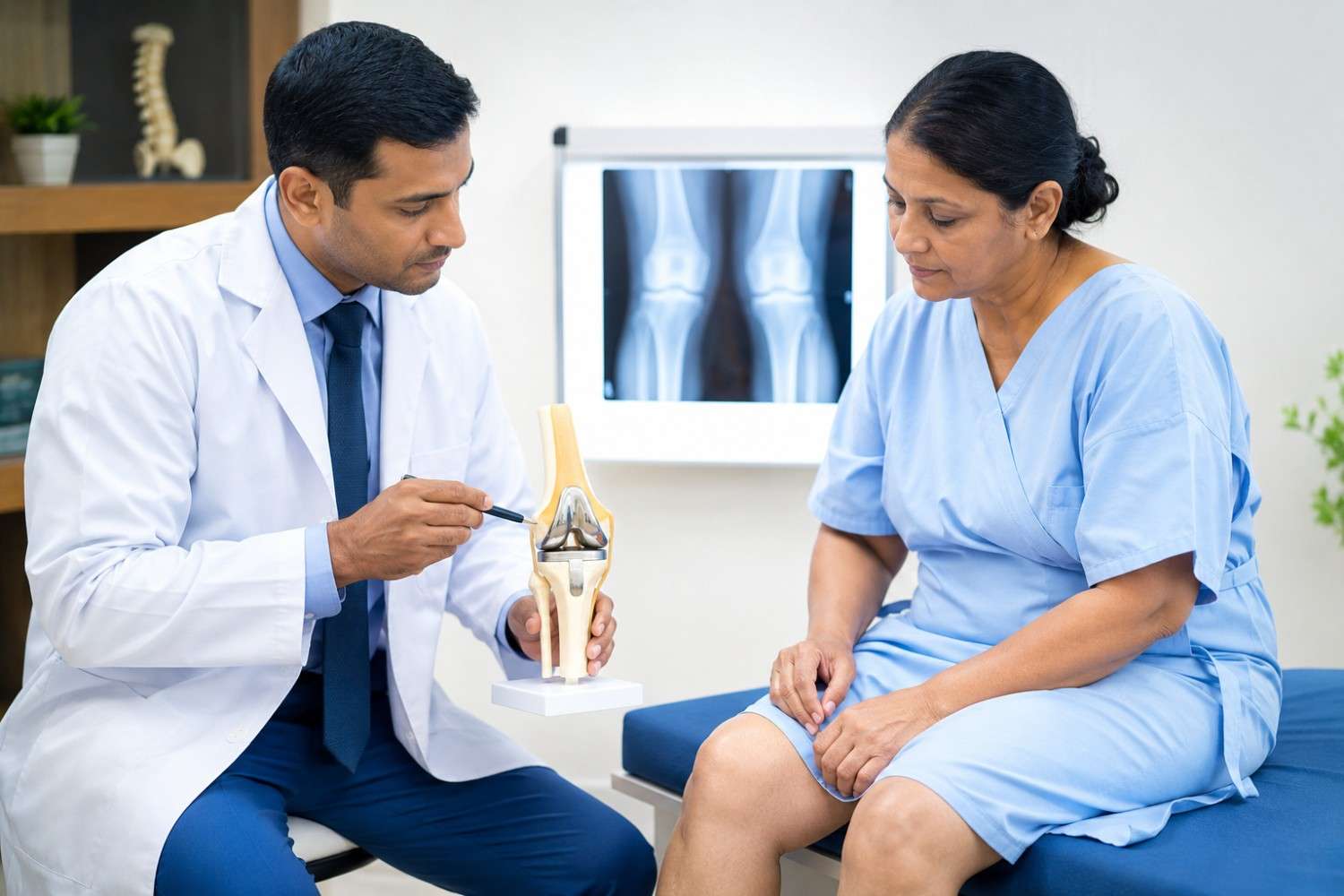
- Examination of gait, alignment, range of motion, ligament stability
- X-rays — standing views show alignment and joint space loss
- MRI — for soft tissue, cartilage, ligaments
- Blood tests when relevant
- Discussion of conservative and surgical options
- Written treatment plan and cost estimate
A confident surgeon doesn’t rush you into surgery on day one. They give you time to consider options.
Conservative Care: Often the First Step
Even if you’ve come for a “surgical opinion,” a top surgeon may recommend:
- Targeted physiotherapy
- Weight management
- Activity modification
- Pain medication
- Knee injections
- Bracing
Many patients improve significantly without surgery — especially in early to moderate disease.
When Surgery Genuinely Makes Sense
Surgery becomes the right choice when:
- Conservative care over weeks or months hasn’t restored function
- Quality of life is significantly limited
- Imaging confirms structural damage
- Mechanical symptoms (locking, giving-way) persist
- Pain disturbs sleep regularly
A trustworthy surgeon explains why surgery is recommended, not just that it is.
Why Patients Choose Ananya Hospitals’ Knee Specialists
Ananya Hospitals is recognised across Bengaluru for excellent knee care. Patients choose us because:
- Senior knee specialists with sub-specialty fellowship training
- High-volume practice in arthroscopy and joint replacement
- Modern laminar airflow OTs for joint surgery
- Joint replacement with technology-assisted precision for selected cases
- Dedicated physiotherapy team with structured rehab
- Conservative-first treatment philosophy
- Transparent implant choice and pricing
- Cashless insurance support
- Patient-friendly communication in multiple languages
Our orthopedics & joint care department treats every knee patient with long-term outcomes in mind.
Recovery Timeline: What to Expect
| Surgery | Recovery Timeline |
| Arthroscopy | Walking same/next day; office work in 1–2 weeks; sports in 2–6 months |
| ACL Reconstruction | Walking next day; sports return in 6–9 months |
| Partial Knee Replacement | Walking next day; full activity in 4–8 weeks |
| Total Knee Replacement | Walking next day; full activity in 6–12 weeks |
| Knee Replacement with Computer Guidance | Similar to total knee, often slightly faster |
Physiotherapy is critical throughout.
Tips for a Good Recovery
- Attend every physiotherapy session
- Take prescribed medication on time
- Walk daily, even for short distances
- Use ice as recommended
- Watch for warning signs (fever, severe pain, redness)
- Don’t bear excessive weight too early
- Continue strengthening exercises long after recovery
- Maintain a healthy weight for long-term joint preservation
FAQs
Q1. How do I find a good knee surgeon near me?
Look for sub-specialty knee experience, fellowship training, high-volume practice, conservative-first approach, and a strong supporting hospital.
Q2. Is knee replacement worth it?
For severe arthritis significantly limiting daily life, yes — modern knee replacement is one of the most successful surgeries in medicine, with very high patient satisfaction.
Q3. How long does a knee replacement last?
Modern implants typically last 15–25 years. Some last even longer with careful activity.
Q4. Will I need physiotherapy after knee surgery?
Yes — always. It’s the single most important factor in your long-term outcome.
Q5. Is knee replacement with computer guidance better than traditional?
For selected complex cases, yes — improved alignment precision. For routine cases, traditional knee replacement by an experienced surgeon is excellent.
Q6. Can I avoid knee surgery?
For early to moderate arthritis, yes — through weight management, physiotherapy, and selective injections.
Q7. How long is the hospital stay after knee replacement?
Typically 2–4 days. Modern protocols enable early mobilisation and discharge.
Q8. What’s the success rate of knee surgery?
Modern knee replacement has over 95% success rate. Patient selection and rehab quality matter most.
Q9. Does insurance cover knee surgery?
Yes, most major plans cover medically necessary knee surgery cashless.
Q10. How do I book a consultation with a knee surgeon at Ananya Hospitals?
Call us directly, walk in, or use our online booking system.
Conclusion
When searching for a best knee surgeon near me in Bengaluru, prioritise expertise, communication, and a strong supporting hospital over mere proximity. The right knee surgeon listens carefully, considers conservative options first, recommends surgery only when truly necessary, and partners with you through full recovery. That partnership often spans years — not just one operation.
If your knees are limiting your life, take the time to choose well. A great knee surgeon can give you back the mobility you thought was lost.
Book Your Consultation at Ananya Hospitals
Talk to our senior knee specialists in Bengaluru. We’ll examine you thoroughly, share honest options, and recommend the right treatment plan for your specific case.
Call us today or book an appointment online . Visit: Ananya Hospitals, Bangalore Department: Orthopedics & Knee Care
Confident knees. Steady steps. Active life.