Hearing that your newborn needs to stay in the NICU can be emotionally overwhelming for any parent. The joy of welcoming a baby is often mixed with fear, confusion, and countless questions when medical care becomes necessary right after birth. While the NICU environment may seem intimidating at first—with monitors, medical staff, and unfamiliar routines—it exists for one purpose: to give your baby the best possible start in life. At Shanbhag Hospital, neonatal care is designed to support not just fragile newborns but also their parents, offering clarity, compassion, and constant reassurance. With experienced specialists and family-focused care, Shanbhag Hospital ensures parents never feel alone during this journey.
This guide walks parents through what the NICU is, why babies are admitted, what daily care looks like, and how families can stay involved while their baby receives specialised support.
Understanding the NICU Environment
The Neonatal Intensive Care Unit, commonly known as NICU, is a specialised area of the hospital designed to care for newborns who need extra medical attention. Babies in the NICU may be premature, have low birth weight, or require close monitoring due to medical conditions.
The NICU environment includes:
- Advanced monitoring equipment
- Skilled neonatal nurses and doctors
- Strict hygiene and safety protocols
Although it may feel unfamiliar, every aspect of the NICU is designed around safety and recovery.
NICU Care for Newborns and Why It Is Needed
NICU care for newborns is recommended when a baby requires close observation or medical support beyond routine post-birth care. This does not always mean the baby is critically ill; many NICU admissions are precautionary.
Babies may need NICU care due to:
- Premature birth
- Breathing difficulties
- Feeding challenges
- Jaundice or infections
NICU care allows doctors to respond quickly to a baby’s needs.
Common Reasons Babies Are Admitted to NICU
Understanding why babies are admitted can help parents process the situation calmly.
Common reasons include:
- Preterm delivery
- Low oxygen levels at birth
- Complications during delivery
- Low blood sugar
- Difficulty maintaining body temperature
Many of these conditions are temporary and improve with proper care.
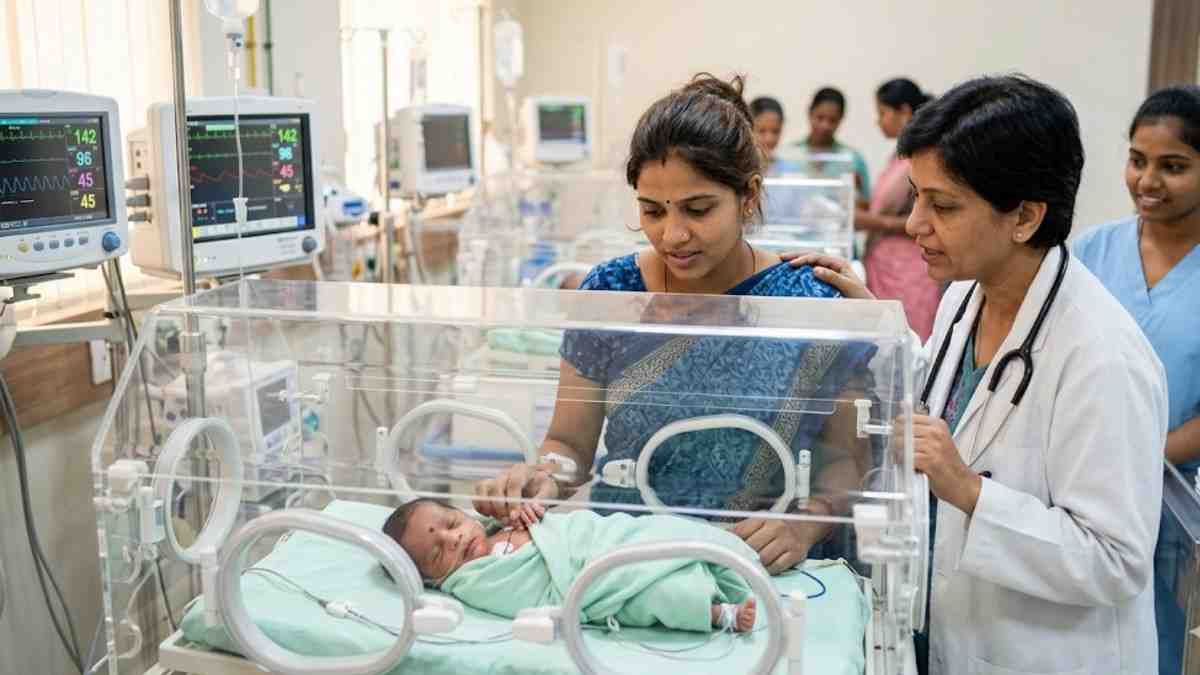
What Parents See When Entering the NICU
Walking into the NICU for the first time can feel overwhelming.
Parents often notice:
- Incubators or warmers
- Heart rate and oxygen monitors
- IV lines or feeding tubes
- Nurses constantly observing babies
While it may look intense, each device plays a role in keeping the baby safe.
Medical Team Caring for Your Baby
A dedicated medical team works around the clock in the NICU.
The team usually includes:
- Neonatologists
- Paediatricians
- Specially trained NICU nurses
- Respiratory therapists
Each professional focuses on a specific aspect of newborn care.
Daily Monitoring and Observation
Babies in the NICU are monitored continuously to track even the smallest changes.
Monitoring focuses on:
- Heart rate and breathing
- Oxygen levels
- Temperature regulation
- Feeding tolerance
This constant observation allows immediate response if needed.
Feeding in the NICU
Feeding may look different in the NICU, especially for premature babies.
Feeding support may include:
- Tube feeding for babies who cannot suck yet
- Expressed breast milk
- Gradual transition to direct breastfeeding
Nutrition is adjusted carefully to support growth and development.
Supporting Breathing and Oxygen Needs
Some babies need help with breathing after birth.
Support methods include:
- Oxygen therapy
- CPAP or non-invasive breathing support
- Close respiratory monitoring
As babies grow stronger, support is gradually reduced.
Temperature Control and Comfort
Newborns, especially preterm babies, struggle to regulate body temperature.
NICU care ensures:
- Warm, controlled environments
- Minimal handling to reduce stress
- Comfortable positioning
Temperature stability supports healthy growth.
Infection Prevention Measures
NICUs follow strict hygiene rules to protect vulnerable babies.
Safety measures include:
- Hand hygiene protocols
- Limited visitors
- Regular equipment sterilisation
These precautions significantly reduce infection risk.
Common Procedures in NICU Explained
Parents may hear about common procedures in NICU that sound worrying but are routine and carefully managed.
These procedures may include:
- Blood tests for monitoring
- IV fluid administration
- Imaging studies
- Feeding tube placement
Doctors explain each step to parents before proceeding.
Parental Involvement in NICU Care
Parents play an important role in their baby’s recovery.
Involvement may include:
- Touching and talking to the baby
- Kangaroo care when permitted
- Participating in feeding routines
Parental presence supports emotional and physical healing.
Emotional Challenges for Parents
Having a baby in the NICU can bring mixed emotions.
Parents often feel:
- Anxiety and fear
- Guilt or helplessness
- Hope alongside uncertainty
Acknowledging these feelings is an important part of coping.
Communication With the Care Team
Clear communication helps parents feel informed and reassured.
Doctors and nurses provide:
- Regular updates on progress
- Explanations of test results
- Answers to parent questions
Open dialogue builds trust and confidence.
Length of Stay in the NICU
Every baby’s NICU journey is unique.
Length of stay depends on:
- Baby’s medical condition
- Ability to feed independently
- Stable breathing and temperature
- Consistent weight gain
Discharge happens only when it is safe.
Preparing for NICU Discharge
Preparing to take the baby home is an important milestone.
Preparation includes:
- Feeding and care education
- Guidance on medications if needed
- Follow-up appointment planning
Parents leave feeling more confident and prepared.
NICU Care in Bangalore and Access to Expertise
Modern NICU care in Bangalore offers advanced facilities, skilled professionals, and comprehensive neonatal support. Access to specialised care close to home reassures families during challenging times.
Key benefits include:
- Advanced neonatal technology
- Experienced neonatal teams
- Family-centred care approaches
Quality NICU care improves outcomes significantly.
Follow-Up Care After NICU Stay
NICU care does not end at discharge.
Follow-up focuses on:
- Growth and weight monitoring
- Feeding progress
- Developmental milestones
Regular follow-ups ensure continued healthy development.
Bonding After the NICU Experience
Bonding continues and strengthens after discharge.
Ways to support bonding include:
- Skin-to-skin contact
- Establishing routines
- Spending quiet time together
Bonding helps both baby and parents heal emotionally.
Supporting Siblings and Family
NICU stays affect the whole family.
Helpful steps include:
- Explaining the situation gently to siblings
- Maintaining routines at home
- Seeking family support
Balanced care supports everyone’s well-being.
Coping Strategies for Parents
Parents can care for themselves while supporting their baby.
Helpful strategies include:
- Taking breaks when needed
- Accepting help
- Talking about feelings
Self-care strengthens emotional resilience.
Understanding That NICU Is a Place of Healing
The NICU is not a sign of failure—it is a place of healing and growth.
Many babies:
- Improve rapidly
- Go on to thrive normally
- Outgrow early challenges
NICU care provides time and support.
Building Confidence Through Knowledge
Learning about NICU processes reduces fear.
Knowledge helps parents:
- Feel involved
- Understand progress
- Participate confidently in care
Informed parents feel empowered.
Hope Beyond the NICU Journey
NICU experiences are challenging but temporary for most families.
With care and patience:
- Babies grow stronger
- Parents gain confidence
- Families heal together
Hope is a constant presence.
Frequently Asked Questions (FAQs)
1. Is NICU admission always serious?
No, many babies are admitted for observation and short-term support.
2. Can parents stay with their baby in the NICU?
Parents are encouraged to visit and participate as permitted.
3. Will NICU stay affect my baby’s future?
Most babies recover fully and develop normally.
4. Is breastfeeding possible in the NICU?
Yes, with support and guidance from the care team.
5. How do parents cope emotionally during NICU stay?
Support, communication, and self-care help significantly.
Conclusion
A NICU stay can be one of the most emotionally challenging experiences for parents, but it is also a place of expert care, healing, and hope. Understanding what to expect helps replace fear with clarity and confidence. Shanbhag Hospital remains committed to providing compassionate neonatal care while supporting families through every stage of the NICU journey. With skilled professionals, transparent communication, and family-centred support, Shanbhag Hospital helps parents move forward with reassurance—knowing their newborn is in safe, caring hands.