The birth of a baby is expected to be joyful, but for some families, the journey begins with unexpected medical attention. When a newborn needs extra monitoring or support after birth, parents may hear the term “NICU” for the first time and feel anxious or unsure. Understanding what each level of NICU means can greatly reduce fear and help parents feel more confident. At Shanbhag Hospital, neonatal care is built around clarity, compassion, and medical excellence, ensuring that families understand every step of their baby’s care. Through skilled specialists and gentle communication, Shanbhag Hospital supports parents during this sensitive phase with reassurance and trust.
A Level 2 NICU plays a vital role in caring for babies who need more than routine newborn care but are not critically ill. This guide explains what a Level 2 NICU is, which babies need it, how care is provided, and what parents can expect during their baby’s stay.
Understanding NICU and Why It Exists
NICU stands for Neonatal Intensive Care Unit. It is a specialised unit designed to care for newborns who need medical support after birth. Not all babies require NICU admission, but when they do, it ensures close monitoring and timely intervention.
NICUs exist to support babies who may have:
- Breathing difficulties
- Feeding challenges
- Premature birth
- Mild infections or complications
NICU care is about giving newborns the safest possible start.
What Level 2 NICU Care Means for Newborns
Level 2 NICU care is designed for babies who need close observation and medical support but are relatively stable. These babies may not require advanced life-support systems but still need specialised neonatal attention.
This level of care focuses on:
- Monitoring vital signs
- Supporting breathing if mildly compromised
- Assisting with feeding
- Managing mild medical conditions
Level 2 NICUs bridge the gap between routine newborn care and intensive critical care.
Which Babies Are Admitted to a Level 2 NICU
Babies admitted to a Level 2 NICU usually have predictable and manageable conditions.
Common reasons include:
- Premature birth after 32 weeks
- Low birth weight
- Mild breathing difficulties
- Jaundice requiring close monitoring
- Babies born after complicated deliveries
These babies are stable but benefit from specialised supervision.
How Level 2 NICU Supports Premature Babies
Premature babies often need extra support as their organs are still developing.
Level 2 NICU helps by:
- Regulating body temperature
- Monitoring breathing patterns
- Supporting feeding until sucking improves
- Tracking growth and development
This support allows babies to mature safely outside the womb.
Medical Equipment Used in Level 2 NICU
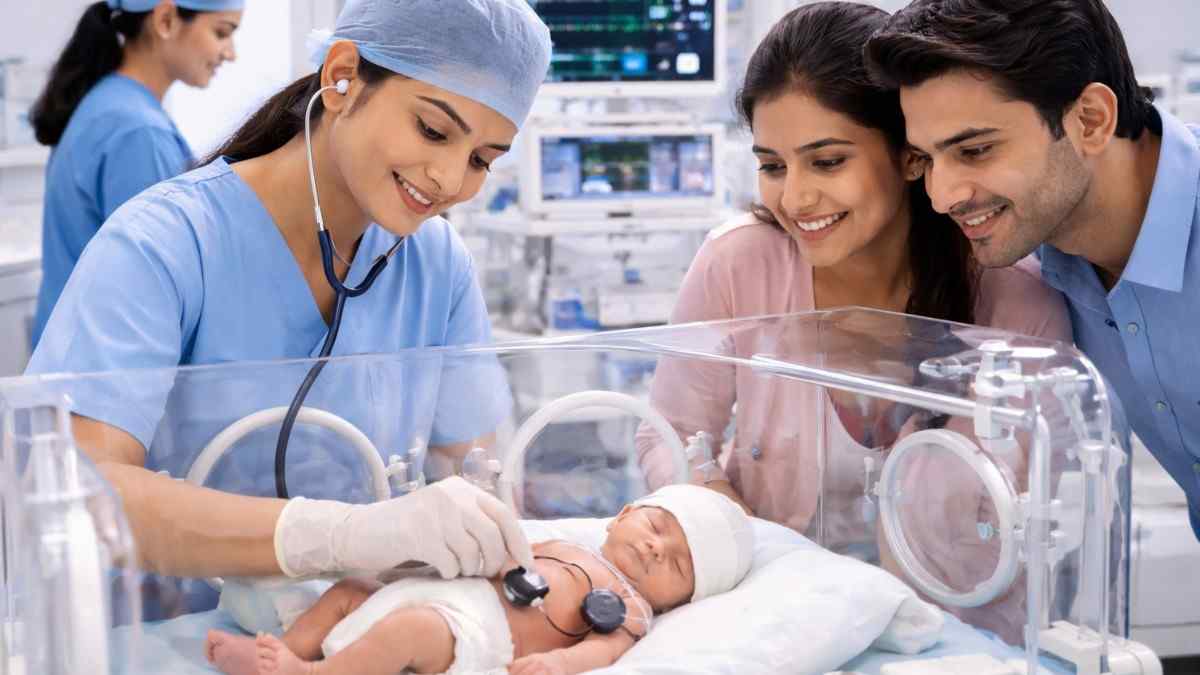
While not as intensive as higher levels, Level 2 NICUs are well-equipped.
Common equipment includes:
- Incubators or radiant warmers
- Oxygen support devices
- Cardiac and respiratory monitors
- Feeding tubes when required
These tools ensure continuous and safe monitoring.
Role of Neonatal Specialists and Nurses
A skilled medical team is the backbone of Level 2 NICU care.
The team includes:
- Neonatologists
- Trained neonatal nurses
- Paediatric support staff
Their expertise ensures timely care and gentle handling of newborns.
Monitoring and Observation in Level 2 NICU
Continuous observation is a key feature of this level of care.
Monitoring focuses on:
- Heart rate
- Breathing patterns
- Oxygen levels
- Feeding tolerance
Any changes are addressed immediately.
Feeding Support for Babies in Level 2 NICU
Feeding can be challenging for some newborns, especially preterm babies.
Support methods include:
- Assisted breastfeeding
- Expressed breast milk feeding
- Tube feeding when necessary
Gradual progress is encouraged based on the baby’s readiness.
Temperature and Comfort Management
Newborns may struggle to regulate body temperature.
Level 2 NICU ensures:
- Controlled warm environments
- Minimal stress handling
- Comfortable positioning
Thermal stability is crucial for growth and recovery.
Infection Prevention and Safety Measures
Newborns are vulnerable to infections, so strict protocols are followed.
Safety measures include:
- Hygiene protocols for staff and visitors
- Controlled access to the unit
- Regular sanitisation
These steps protect fragile newborns.
Emotional Support for Parents
Having a baby in the NICU can be emotionally overwhelming.
Support includes:
- Clear explanations from doctors
- Encouragement to participate in care
- Emotional reassurance
Parental involvement is welcomed and valued.
Parent-Baby Bonding in Level 2 NICU
Bonding is encouraged even during NICU care.
Bonding opportunities include:
- Kangaroo care when appropriate
- Touch and voice interaction
- Assisted feeding sessions
These moments support emotional and physical development.
How Long Do Babies Stay in a Level 2 NICU
The length of stay depends on the baby’s condition and progress.
Discharge is considered when:
- Baby feeds independently
- Vital signs are stable
- Weight gain is consistent
The goal is a safe transition to home care.
Transition From NICU to Home
Preparing parents for discharge is an important step.
Preparation includes:
- Feeding guidance
- Temperature and hygiene advice
- Follow-up appointment planning
Parents leave feeling informed and confident.
Level 2 NICU vs Level 3 NICU: Understanding the Difference
The difference between level 2 NICU vs level 3 NICU lies in the complexity of care provided.
Key distinctions include:
- Level 2 handles stable babies with moderate needs
- Level 3 manages critically ill or extremely premature babies
- Advanced life-support is available in Level 3
Both levels play essential roles in neonatal care.
Importance of Early Intervention in NICU Care
Early care reduces complications and improves outcomes.
Benefits include:
- Faster recovery
- Reduced long-term risks
- Better growth and development
Timely NICU support makes a significant difference.
Role of Technology in Neonatal Monitoring
Modern technology enhances safety and precision.
Technological support includes:
- Continuous monitoring systems
- Early alert mechanisms
- Accurate data tracking
Technology supports proactive care.
Nutrition and Growth Tracking
Growth monitoring is a daily priority.
Tracking includes:
- Weight gain
- Feeding tolerance
- Digestive comfort
Nutrition plans are adjusted as needed.
Communication Between Parents and Care Team
Open communication builds trust.
Effective communication includes:
- Daily updates
- Answering parent questions
- Explaining progress clearly
Transparency reduces anxiety.
Follow-Up Care After NICU Discharge
NICU care continues beyond hospital stay.
Follow-up focuses on:
- Growth assessment
- Feeding progress
- Developmental milestones
Ongoing care ensures long-term well-being.
Importance of Choosing the Right NICU Facility
Not all NICUs offer the same level of care and comfort.
Parents often look for the best level 2 NICU care for newborns where expertise, infrastructure, and compassionate support come together.
Key considerations include:
- Skilled neonatal team
- Modern equipment
- Family-centred care approach
The right environment supports healing.
Building Confidence in Parents
NICU experiences can be empowering with the right support.
Parents gain:
- Knowledge about newborn care
- Confidence in handling their baby
- Trust in their caregiving abilities
Education is part of healing.
Emotional Well-Being of Families
Supporting families emotionally is essential.
Support systems include:
- Counselling if needed
- Encouragement and reassurance
- Family involvement
Emotional care strengthens resilience.
Creating a Safe Start for Fragile Newborns
Every newborn deserves a safe beginning.
Level 2 NICU care provides:
- Protection
- Support
- Time to grow stronger
It acts as a bridge to healthy infancy.
Frequently Asked Questions (FAQs)
1. Is Level 2 NICU care serious?
It is specialised but for babies who are generally stable.
2. Can parents visit babies in Level 2 NICU?
Yes, parental involvement is encouraged under guidance.
3. Do all premature babies need Level 2 NICU?
Many do, depending on gestational age and health.
4. Is breastfeeding possible in Level 2 NICU?
Yes, with support and guidance from the care team.
5. Will NICU stay affect long-term development?
Most babies recover well and develop normally with proper care.
Conclusion
A Level 2 NICU offers reassurance during an uncertain start, providing newborns with the care they need while giving parents clarity and confidence. Understanding this level of care helps families feel informed rather than fearful. Shanbhag Hospital is committed to delivering neonatal care that balances medical expertise with emotional sensitivity, ensuring every baby receives attentive and nurturing support. With dedicated professionals and a family-focused approach, Shanbhag Hospital continues to stand beside parents, guiding newborns from early challenges toward healthy, hopeful beginnings.