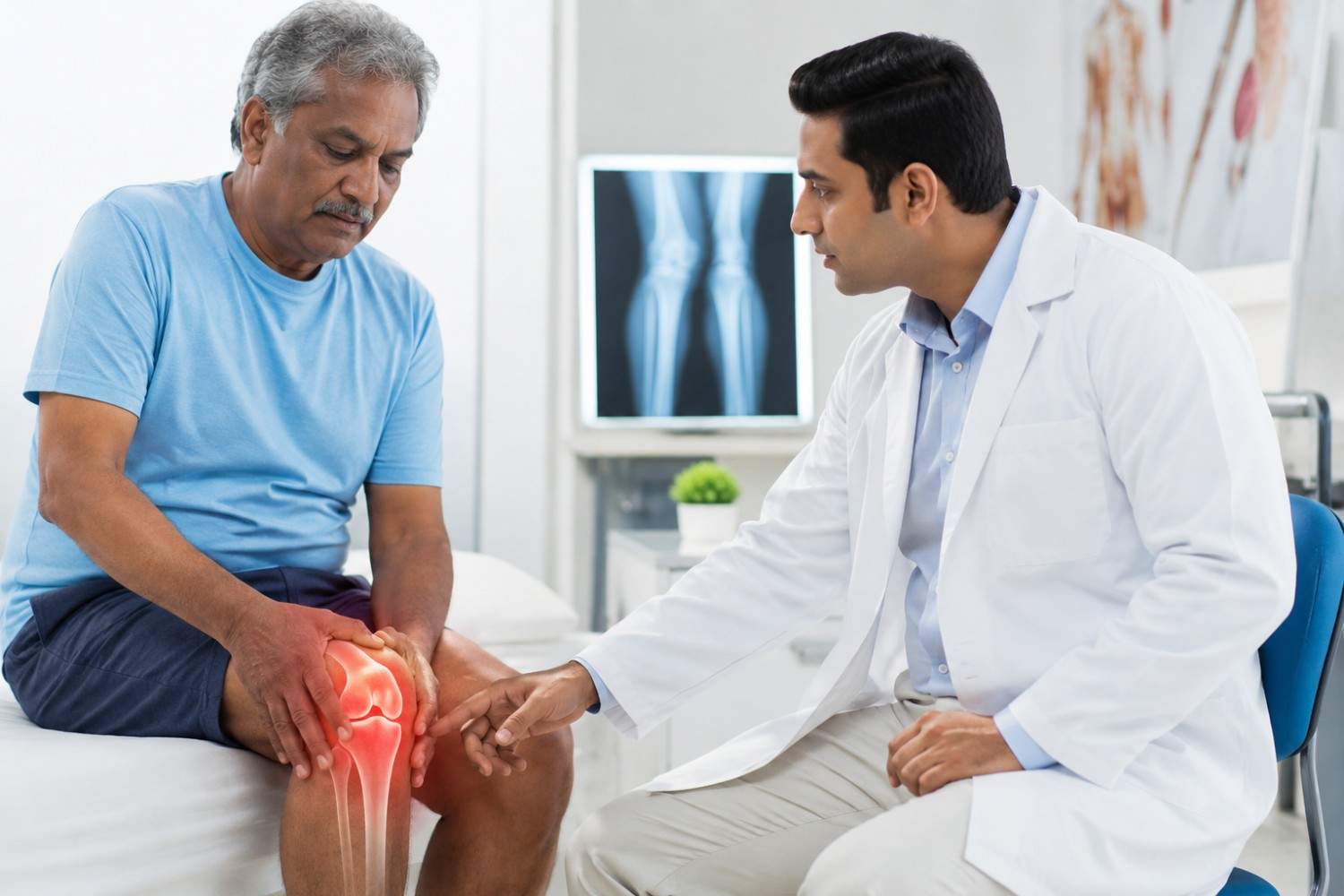
A knee that aches now and then is part of being human. A knee that hurts severely — that wakes you up at night, that makes you hesitate before climbing stairs, that swells after a regular walk, that turns getting up from a chair into a slow, careful event — is not normal. Yet thousands of people across Bengaluru live with severe knee joint pain for years before seeking proper evaluation. They try painkillers, oils, heat packs, ayurvedic remedies, and online stretches — usually without ever discovering what’s actually causing the pain.
This guide is meant to break that pattern. We’ll walk through what causes severe knee pain, how it’s properly evaluated, what the modern treatment menu looks like (most of it is not surgery), and when joint replacement genuinely makes sense.
What Counts as Severe Knee Pain?
Pain becomes severe when it:
• Disturbs sleep
• Limits walking distance to under 10–15 minutes
• Makes climbing stairs painful
• Causes a visible limp
• Triggers swelling that lasts hours
• Reduces your independence in daily activities
• Doesn’t respond to over-the-counter painkillers
• Recurs episodically with worsening intensity
If your knee pain checks any 3 of those boxes, it’s no longer routine — it deserves an orthopaedic evaluation.
Common Causes of Severe Knee Pain
| Cause | Typical Pattern |
| Osteoarthritis | Slow-onset pain, stiffness, swelling, common after 50 |
| Meniscal tear | Sudden pain after a twist, locking sensation |
| ACL / ligament injury | Sports-related, sudden, with instability |
| Patellofemoral pain syndrome | Pain in front of knee, worse with stairs |
| Bursitis | Localised swelling and tenderness |
| Gout | Sudden, severe, hot, swollen joint |
| Rheumatoid arthritis | Multiple joints, morning stiffness |
| Infection (septic arthritis) | Hot, painful, swollen knee with fever |
| Bone-on-bone arthritis | End-stage knee arthritis with severe disability |
| Patellar tendinitis (“jumper’s knee”) | Athletes, pain below kneecap |
Each has very different treatment, which is why a proper diagnosis matters so much.
Symptoms That Need Urgent Attention
Visit a hospital quickly if your knee pain is associated with:
• Sudden inability to bear weight
• Visible deformity after injury
• Hot, red, severely swollen knee with fever
• Loss of sensation or movement in the leg
• Numbness below the knee
• Severe locking — knee won’t bend or straighten
The Cleveland Clinic resource on knee pain outlines warning signs that warrant prompt care.
How Severe Knee Pain Is Evaluated
A proper consultation usually involves:
1. Detailed history — onset, duration, triggers, relieving factors
2. Physical examination — range of motion, alignment, ligament stability tests
3. X-ray of the knee — shows arthritis, alignment, fractures
4. MRI — for ligaments, menisci, cartilage
5. Blood tests — to rule out gout, rheumatoid arthritis, infection
6. Joint fluid analysis — if infection or crystal disease suspected
7. Standing alignment X-rays — for joint replacement planning
A skilled orthopaedist often arrives at a working diagnosis on examination alone — imaging confirms the picture.
Modern Treatment: A Layered Approach
Severe knee pain is rarely treated with surgery as the first step. The modern approach is layered:
Layer 1: Conservative Care
• Activity modification (avoid pain triggers temporarily)
• Weight management (every kilo lost reduces 4 kilos of knee load)
• Targeted physiotherapy (the single most effective non-surgical tool)
• Strengthening of quadriceps and hip muscles
• Postural and gait correction
• Anti-inflammatory medication (short courses)
• Topical pain relievers
• Knee braces or sleeves
Layer 2: Interventional Treatment
• Steroid injections — for arthritis flare-ups (limited use)
• Hyaluronic acid (viscosupplementation) — for moderate arthritis
• Platelet-rich plasma (PRP) — selected cases
• Genicular nerve blocks / RF ablation — for chronic arthritis pain
• Aspiration — to drain swollen joints
Layer 3: Surgical Options
When conservative care fails:
• Knee arthroscopy — meniscal or ligament repair
• High tibial osteotomy — for younger patients with one-sided arthritis
• Partial knee replacement — when only one compartment is involved
• Total knee replacement — for advanced bone-on-bone arthritis
• Robotic / computer-assisted knee replacement — improved precision
The Mayo Clinic resource on knee surgery provides detailed reading.
Knee Arthroscopy: The Keyhole Solution
For meniscal tears, cartilage damage, and selected ligament problems, knee arthroscopy is the standard. Through 2 or 3 small portals, a camera and instruments are inserted to repair, trim, or reconstruct the damaged structure.
• General or regional anaesthesia
• 30–90 minute procedure
• Day-care discharge for many patients
• Walking with support same day
• Return to office work in 1–2 weeks
• Sports return in 3–6 months (depending on procedure)
Knee Replacement: When and Why
Knee replacement is considered when:
• Daily activities are severely restricted
• Pain disturbs sleep
• Walking distance is markedly reduced
• Conservative treatment has been exhausted
• X-rays show advanced arthritis (bone-on-bone, severe deformity)
• Quality of life is significantly affected
Modern total knee replacement involves resurfacing the worn ends of the femur, tibia, and (sometimes) patella with metal-and-polyethylene components. Patients typically:
• Walk with support next day
• Climb stairs by week 2–3
• Return to driving by week 4–6
• Resume routine life by week 6–8
• Continue improving up to 6–12 months
Modern implants typically last 15–25 years.
Why Choose Ananya Hospitals for Knee Pain Treatment
Ananya Hospitals is built around evidence-based, conservative-first knee care. Patients across Bengaluru choose us because:
• Senior orthopaedic and joint replacement surgeons
• In-house physiotherapy with structured rehab plans
• Modern MRI and digital X-ray facilities
• Pain management specialists for injection-based treatments
• Arthroscopic and joint replacement expertise
• Honest, non-aggressive surgical approach
• Transparent pricing and implant choice
• Cashless insurance support
Our orthopedics department treats knee pain with a long-term lens — preserving your natural joint as long as possible, and replacing it skilfully when truly needed.
Lifestyle Habits That Genuinely Help
• Maintain healthy weight — single most impactful factor
• Walk regularly on flat surfaces
• Avoid deep squatting, sitting cross-legged on floor
• Strengthen quadriceps with structured exercises
• Use stairs carefully — descend with proper technique
• Sleep with a pillow between knees if side-sleeping
• Address vitamin D and calcium deficiency
• Manage diabetes, thyroid, and other systemic conditions
When Knee Pain Becomes a Medical Emergency
Seek immediate care for:
• A hot, red, severely painful knee with fever (possible infection)
• Sudden inability to bear weight after an injury
• Visible deformity
• Numbness or weakness below the knee
• Severe locking or instability
FAQs
Q1. When should I see a doctor for severe knee pain?
If pain is interfering with sleep, walking, or daily activity, or if it’s not responding to home care after 2 weeks — see an orthopaedic specialist.
Q2. Is knee replacement always required for arthritis?
No. Most arthritis cases respond to conservative care for years. Replacement is reserved for advanced cases with severe disability.
Q3. How long does a knee replacement last?
Modern implants typically last 15–25 years. With careful activity, they can last even longer.
Q4. Is knee surgery painful?
Modern multimodal pain management makes recovery far more comfortable than it used to be. Most patients walk the next day with mild discomfort.
Q5. What’s the difference between partial and total knee replacement?
Partial replaces only the worn-out compartment of the knee; total replaces all three compartments. Partial is suited for selected cases.
Q6. Do knee injections cure arthritis?
No, but they can provide significant temporary relief — especially during flare-ups. They’re part of overall management, not a cure.
Q7. Can young people get severe knee pain?
Yes. Sports injuries, ligament tears, meniscal damage, and patellofemoral pain are common in younger adults.
Q8. Is robotic knee replacement worth the extra cost?
For selected complex cases, yes — it can offer improved precision and alignment. For straightforward cases, traditional knee replacement is excellent.
Q9. Will I be able to sit cross-legged after knee replacement?
Most patients regain full daily function but may have some limitation in deep flexion. This depends on implant type and individual factors.
Q10. How do I find the best knee specialist near me in Bangalore?
Look for an orthopaedic surgeon with sub-specialty interest in knee surgery, strong physiotherapy infrastructure, and transparent communication — exactly what Ananya Hospitals offers.
Conclusion
Severe knee joint pain in Bangalore is not something to live with. Whether the cause is arthritis, a meniscal tear, ligament injury, or another condition, modern orthopaedics offers a wide range of effective treatments — most of which avoid surgery entirely. And when surgery is needed, today’s techniques deliver outcomes that were unimaginable a generation ago.
If your knees are limiting your life, please don’t keep waiting. A short consultation with an experienced orthopaedic specialist usually clarifies exactly what’s happening — and what to do about it.
Book Your Consultation at Ananya Hospitals
Talk to our senior orthopaedic and joint replacement surgeons in Bengaluru. We’ll examine you carefully, recommend the least invasive treatment, and only consider surgery when truly justified.
Call us today or book an appointment online. Visit: Ananya Hospitals, Bangalore Department: Orthopedics & Joint Care
Confident knees. Active life. No more limping.