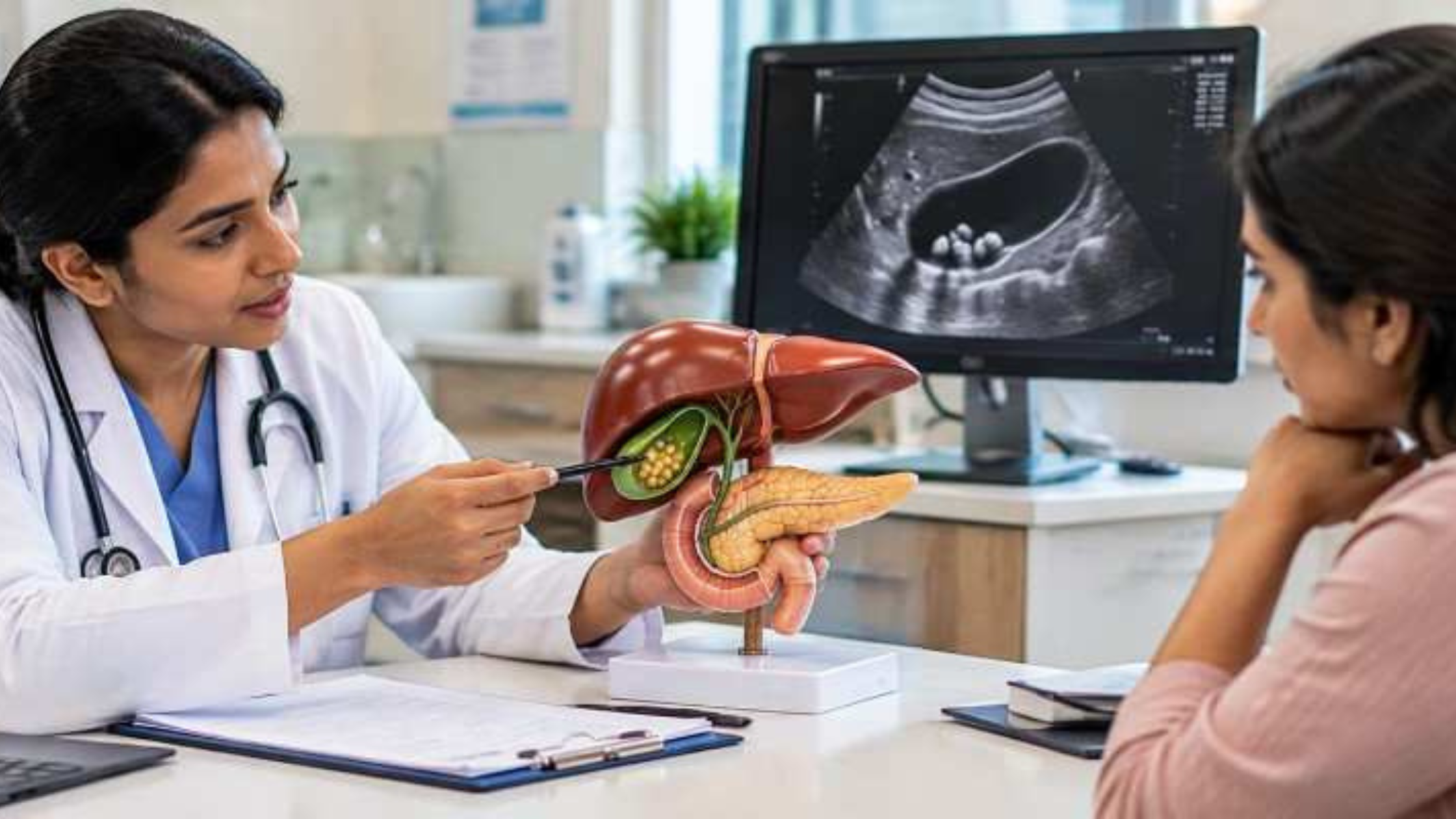
Gallstones are hardened deposits that can develop inside the gallbladder and may range from very small particles to larger stones. Some people have gallstones without experiencing any symptoms, while others may develop abdominal pain, nausea, vomiting, or digestive discomfort when a stone blocks the normal flow of bile. Ananya Hospital provides gastroenterology evaluation for people experiencing possible gallstone symptoms, helping patients understand their condition, diagnostic options, and appropriate treatment based on the location and severity of the stones.
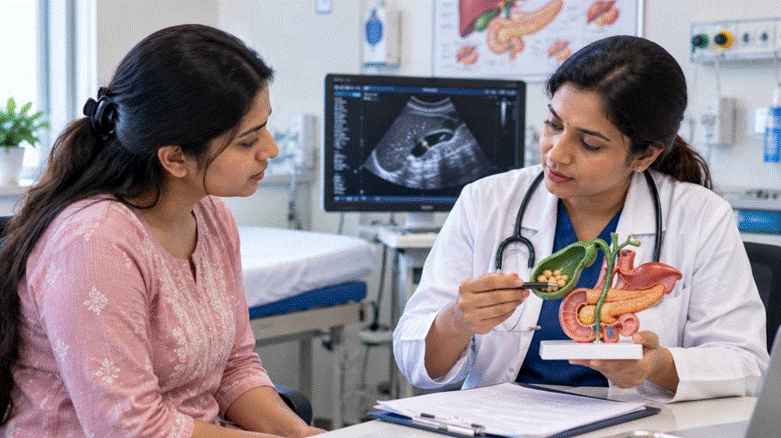
What Are Gallstones?
The gallbladder is a small organ located beneath the liver that stores bile, a digestive fluid produced by the liver. Gallstones can form when substances in bile become imbalanced and crystallise.
The two common types are:
- Cholesterol stones
- Pigment stones
A person may have one gallstone or multiple stones.
People experiencing recurring upper abdominal discomfort can consult a gallstone specialist in Rajajinagar for appropriate evaluation.
What Causes Gallstones?
Gallstones can develop due to several factors affecting the composition or movement of bile.
Possible risk factors include:
- Being overweight or having obesity
- Rapid weight loss
- Pregnancy
- Increasing age
- A family history of gallstones
- Certain medical conditions
- Some dietary and metabolic factors
Having one or more risk factors does not necessarily mean that a person will develop gallstones.
Warning Signs of Gallstones
Many gallstones do not cause symptoms. When a stone blocks the bile ducts, however, symptoms may develop.
Common warning signs include:
- Sudden pain in the upper right or upper middle abdomen
- Pain after eating, particularly after heavy meals
- Pain that may spread towards the back or right shoulder
- Nausea
- Vomiting
- Bloating
- Indigestion
Abdominal pain caused by gallstones is sometimes referred to as biliary colic.
Gallstones and Abdominal Pain
Gallstone-related pain may occur when a stone temporarily blocks the flow of bile from the gallbladder.
The pain can be:
- Sudden
- Moderate to severe
- Located in the upper right abdomen
- Felt after meals
- Persistent for several hours in some cases
Not all abdominal pain is caused by gallstones. Conditions involving the stomach, pancreas, liver, or intestines can produce similar symptoms.
When Gallstones Need Medical Attention
Gallstones require prompt medical evaluation when symptoms become severe or are accompanied by warning signs such as:
- Severe or persistent abdominal pain
- Fever or chills
- Yellowing of the skin or eyes
- Persistent vomiting
- Dark urine
- Pale stools
These symptoms may indicate complications involving the gallbladder or bile ducts. Severe pain, fever, jaundice, or persistent vomiting should be assessed urgently.
How Are Gallstones Diagnosed?
Diagnosis usually begins with a medical history and physical examination. Doctors may recommend imaging and laboratory tests depending on the symptoms.
Common investigations include:
- Abdominal ultrasound
- Blood tests
- Liver function tests
- CT scan in selected cases
- MRI or MRCP when bile duct problems are suspected
An ultrasound is commonly used to identify gallstones and assess the gallbladder.
Patients looking for gallbladder treatment in Bangalore can discuss their symptoms and investigation options with a gastroenterology team.
Can Blood Tests Detect Gallstones?
Blood tests do not directly identify most gallstones. However, they can help doctors assess inflammation, infection, or possible blockage of the bile ducts.
Depending on the situation, doctors may evaluate:
- Liver enzymes
- Bilirubin
- White blood cell count
- Other relevant blood markers
Blood tests are generally interpreted together with symptoms and imaging results.
Gallstones Without Symptoms
Some people have gallstones but never experience symptoms. These are often discovered incidentally during an ultrasound or other abdominal investigation.
Not every person with asymptomatic gallstones requires immediate treatment. The recommended approach depends on individual circumstances and the presence of complications or risk factors.
A doctor can determine whether observation or treatment is appropriate.
Gallstone Treatment Options
Treatment depends on whether gallstones are causing symptoms or complications.
Possible approaches include:
- Observation for selected asymptomatic cases
- Pain management
- Treatment of gallbladder inflammation
- Treatment of bile duct obstruction
- Surgical removal of the gallbladder when indicated
Medicines are not appropriate for every type of gallstone and are generally considered only in selected situations.
Gallbladder Surgery for Gallstones
When gallstones repeatedly cause symptoms or complications, removal of the gallbladder may be recommended.
The procedure is known as cholecystectomy.
Gallstone surgery in Bangalore may be considered when symptoms are recurrent or when complications develop.
The suitability of surgery depends on the patient’s health, symptoms, gallstone location, and clinical findings.
Laparoscopic Gallbladder Surgery
Laparoscopic cholecystectomy is a minimally invasive surgical procedure in which the gallbladder is removed through small incisions.
Potential advantages compared with traditional open surgery may include:
- Smaller incisions
- Less postoperative discomfort in many patients
- Shorter hospital stay in appropriate cases
- Faster return to normal activities
However, the appropriate surgical technique depends on the individual case.
Patients considering laparoscopic gallbladder surgery in Rajajinagar should discuss the procedure, risks, benefits, and recovery expectations with their surgeon.
Can Gallstones Be Treated Without Surgery?
Some people with asymptomatic gallstones may not need immediate treatment.
For symptomatic gallstones, surgery is often considered because it addresses the gallbladder containing the stones rather than simply treating individual episodes of pain.
Non-surgical treatment may be suitable only for selected patients and depends on the type of stones and overall clinical situation.
Diet for Gallstones
Dietary changes cannot reliably dissolve existing gallstones, but healthy eating habits may help reduce digestive discomfort and support overall health.
Helpful habits can include:
- Choosing balanced meals
- Avoiding excessive fatty foods if they trigger symptoms
- Eating appropriate portions
- Maintaining a healthy weight
- Avoiding crash diets or rapid weight loss
Individual dietary recommendations should be based on symptoms and medical advice.
Can Gallstones Come Back After Treatment?
After gallbladder removal, gallstones cannot form inside the removed gallbladder. However, stones can sometimes occur in the bile ducts in certain circumstances.
People who have undergone treatment should follow their doctor’s postoperative recommendations and return for evaluation if new symptoms develop.
When Should You See a Doctor?
Medical evaluation is recommended if you experience repeated upper abdominal pain, particularly after meals, or symptoms such as nausea and vomiting.
Seek urgent medical attention for:
- Severe abdominal pain
- Fever
- Jaundice
- Persistent vomiting
- Confusion or marked weakness
These symptoms may indicate a complication requiring prompt treatment.
For patients who need a gallbladder specialist in Bangalore, a gastroenterology evaluation can help determine the appropriate next step.
Gallstone Evaluation at Ananya Hospital
Ananya Hospital provides gastroenterology evaluation for patients with gallstones, abdominal pain, and other digestive concerns. Assessment may include a review of symptoms, medical history, laboratory investigations, and imaging such as ultrasound when appropriate. Based on the findings, the medical team can help determine whether observation, medical management, or further intervention is required. Patients experiencing gallstone-related symptoms can discuss their concerns with the appropriate specialist team.
Frequently Asked Questions
Are gallstones always painful?
No. Many people have gallstones without experiencing any symptoms. Pain usually develops when a stone interferes with the normal flow of bile.
What is the most common symptom of gallstones?
Upper abdominal pain, particularly in the right upper abdomen, is a common symptom of symptomatic gallstones. Nausea and vomiting may also occur.
Can gallstones disappear on their own?
Gallstones generally do not disappear on their own. Treatment depends on whether they are causing symptoms or complications.
Is gallbladder removal necessary for everyone with gallstones?
No. People with asymptomatic gallstones may not require immediate surgery. Treatment decisions depend on symptoms, complications, and individual risk factors.
How is gallstone surgery performed?
Gallbladder removal is commonly performed using laparoscopic surgery when appropriate. The exact surgical approach depends on the patient’s condition.
Conclusion
Gallstones can cause no symptoms in some people, while others may experience upper abdominal pain, nausea, or digestive discomfort. Medical evaluation and investigations, such as an ultrasound, can help determine whether gallstones are present and whether treatment is needed. The appropriate approach depends on the symptoms, investigation results, and the patient’s overall health.
If you experience repeated abdominal pain, particularly after meals, or persistent nausea, consult a healthcare professional to determine the cause. For an evaluation of recurring abdominal pain or suspected gallstones, please contact the Ananya Hospital OPD or reception to arrange a consultation.
Follow us on Instagram: Get practical digestive-health information, gallbladder awareness tips, and healthcare updates from Ananya Hospital.
Disclaimer: The information provided in this article is for educational and informational purposes only and should not be construed as professional medical advice, diagnosis, or treatment. Always seek the advice of your physician or qualified healthcare provider with any questions you may have regarding a medical condition.