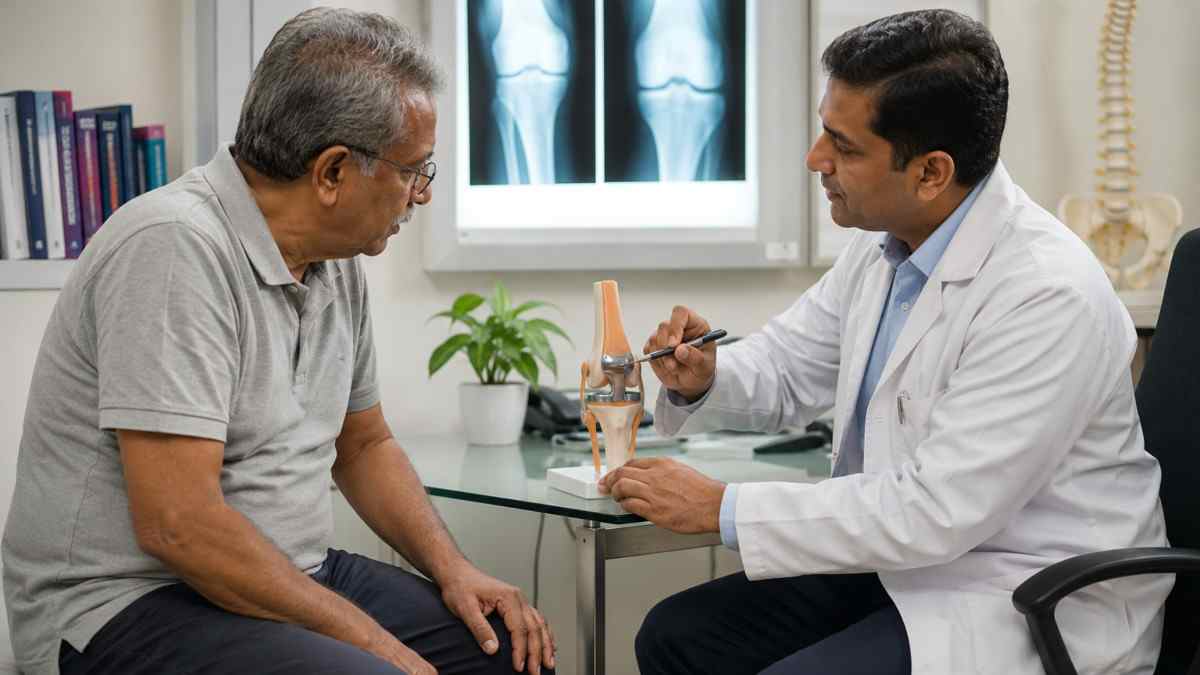
Your mother has stopped coming down for her evening walk. She says the knee is fine, but she’s holding the railing with both hands and has quietly given up sitting cross-legged for pooja. That gradual shrinking of daily life is usually what brings families to ask about joint replacement in Bangalore, long after the first twinge appeared. Ananya Hospital provides hospital-based orthopaedic evaluation and treatment for patients considering knee or hip joint replacement in Bangalore.
The decision isn’t only about pain scores or X-ray findings. It’s about what the joint is stopping you from doing, and whether everything short of surgery has genuinely been tried. Here’s a plain look at when replacement helps, what it involves, and what recovery really demands. This is general information, so please discuss your own case with a qualified doctor.
What Joint Replacement Actually Means
In arthritis, the smooth cartilage lining a joint wears away until bone rubs against bone. Replacement surgery removes the damaged surfaces and caps them with metal and high-grade plastic components, restoring a smooth bearing surface.
The bone isn’t taken out wholesale. In a knee, only a few millimetres are resurfaced. In a hip, the ball is replaced and a socket liner fitted. The aim of joint replacement in Bangalore is the same as anywhere: relief from arthritic pain, and enough movement to get back to walking, stairs and everyday independence. It isn’t a route to a brand-new athletic joint, and any honest surgeon will say so.
Signs It May Be Time to Consider Joint Replacement in Bangalore
There’s no single threshold, but a familiar pattern shows up again and again.
• Pain at rest or at night, not just with activity
• Walking distance shrinking to a few hundred metres
• Stairs, squatting, or getting up from a chair becoming a planned event
• Painkillers needed most days, with diminishing effect
• Physiotherapy, weight loss and injections already tried without lasting benefit
• X-rays showing bone-on-bone contact with loss of joint space
If three or four of those apply and your daily life has narrowed, it’s reasonable to have the conversation. If pain is intermittent and you’re still doing what you want, waiting is entirely sensible.
Knee Replacement in Bangalore: What’s Involved
The knee is the commonest joint replacement in Bangalore, and across India generally, largely because osteoarthritis of the knee is so widespread here, and because squatting and floor sitting load the joint heavily over decades.
Total Versus Partial
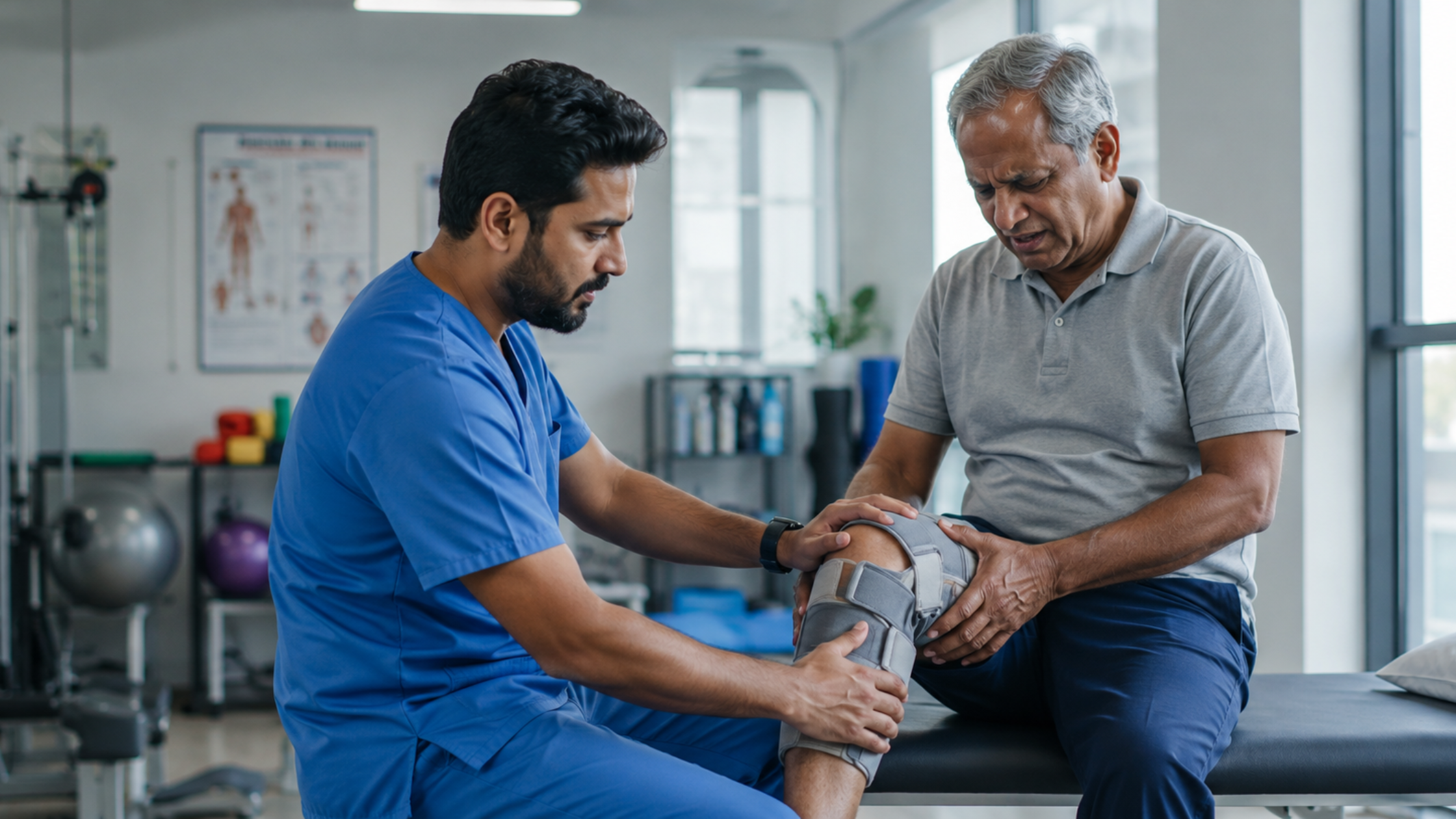
A total knee replacement resurfaces the whole joint. A partial, or unicompartmental, replacement treats only the worn side, usually the inner compartment. Partial surgery preserves more of your own ligaments, feels more natural, and recovers faster, but it only suits patients whose arthritis is confined to one compartment. Your joint replacement surgeon in Bangalore decides from examination and imaging, sometimes only after inspecting the joint.
What Recovery Looks Like
Most patients stand and take a few steps with a walker within a day. Hospital stay is commonly three to five days. Bending to ninety degrees is an early target, stairs come within a couple of weeks, and pain and swelling typically keep improving for six months or more. Kneeling and deep squatting often stay uncomfortable permanently, which is worth knowing before you agree to knee replacement in Bangalore.
Hip Replacement in Bangalore: What’s Involved
Hip arthritis often announces itself as groin pain and difficulty putting on socks or shoes. Avascular necrosis, where the blood supply to the femoral head fails, is another common reason forhip replacement in Bangalore, and it affects younger patients, sometimes in their thirties and forties.
Recovery from hip surgery is often quicker than knee surgery. Many patients walk with support the same day and feel much better within six weeks. The trade-off is a set of early precautions to avoid dislocation: no deep bending at the hip, no crossing the legs, no low seating. Floor-level toilets need planning, and a raised commode seat is usually recommended.
Timing: Who Should Wait Before Joint Replacement in Bangalore
Age alone isn’t the deciding factor, but it shapes the discussion. Implants have a finite life, commonly well beyond fifteen years with modern materials, so a very active 48-year-old may face a revision later. Waiting too long has its own costs: severe deformity, wasted thigh muscle and long-standing stiffness make rehabilitation harder and outcomes less predictable.
Some conditions should be sorted first. Uncontrolled diabetes raises infection risk, active dental or urinary infection needs treating, and significant obesity increases both surgical difficulty and complication rates. A good joint replacement surgeon in Bangalore will delay elective surgery to fix these rather than push ahead.
Implants, Costs and Choosing an Orthopedic Hospital in Bangalore
| Consideration | What varies | Why it matters |
| Implant material | Cobalt-chrome, titanium, oxidised zirconium, ceramic | Affects wear rate and cost |
| Fixation | Cemented or uncemented | Bone quality and age guide the choice |
| Bearing | Standard or high-flex, cross-linked polyethylene | Influences achievable bend |
| Technique | Conventional, computer-navigated, robot-assisted | Alignment accuracy; adds cost |
| Room category | Sharing to single suite | Often the biggest bill variable |
| Insurance | Room-rent caps, implant limits, waiting periods | Decides your actual outlay |
Costs forjoint surgery in Bangalore span a wide band depending on those choices, hospital category and whether one or both sides are done. Treat every figure as indicative until you hold a written estimate itemising implant, surgeon, anaesthesia, room and physiotherapy. Comparing one orthopedic hospital in Bangalore with another means comparing inclusions, not headline numbers.
Recovery After Joint Replacement in Bangalore, Step by Step
1. Day 0 to 2: standing and short walks with a walker, pain control, blood-thinning measures.
2. Week 1 to 2: discharge home, stitches or staples removed, daily supervised exercises.
3. Week 3 to 6: walking stick instead of walker, stairs, driving discussed around six weeks.
4. Month 2 to 6: stamina builds, swelling settles slowly, most household activity resumes.
5. Beyond six months: continued gradual improvement; long walks and cycling usually fine, impact sport generally discouraged.
Home preparation makes a real difference in Bangalore’s older houses. Sort out the steep entrance step, poor stair lighting, loose rugs and bathroom grab bars before admission, not after.
Risks and Honest Expectations
Complications after joint replacement in Bangalore are uncommon, but they exist: infection, blood clots, stiffness, persistent swelling, leg-length difference after hip surgery, and loosening years later. Rates are low in well-run units, and most are treatable if caught early, which is why follow-up visits matter.
Satisfaction is generally high, though a minority of knee patients describe a joint that works well but never feels entirely like their own. Set expectations around function, not perfection. Being able to walk to the park, sleep through the night and manage stairs unaided is the realistic prize.
Why Choose Ananya Hospital for Joint Replacement in Bangalore?
Choosing a hospital for joint replacement involves more than comparing implant brands or procedure costs. Ananya Hospital provides a hospital-based setting for patients seeking orthopaedic assessment, joint replacement surgery and post-operative support. A coordinated hospital environment can help patients access appropriate evaluation, surgical care, rehabilitation and follow-up based on their individual condition. For patients considering knee replacement in Bangalore or hip replacement in Bangalore, having access to organised hospital care can support a smoother treatment and recovery journey.
Frequently Asked Questions
At what age should I consider knee or hip replacement?
There’s no fixed age. Most people having joint replacement in Bangalore are between 55 and 75, but younger patients with avascular necrosis or rheumatoid arthritis may need surgery earlier. The decision rests on pain, function and how far conservative treatment has been pushed, not on the number in your file.
How long do replaced joints last?
Modern implants commonly last well beyond fifteen years, and many go longer. Longevity depends on activity level, body weight, implant type and bone quality. High-impact activity shortens it. Regular follow-up allows early detection of wear or loosening, which makes any future revision surgery simpler.
Can both knees be replaced at the same time?
Sometimes, yes. Simultaneous bilateral joint surgery in Bangalore means one anaesthetic and one rehabilitation period, but it demands good general health and heart function. Staged surgery a few months apart is safer for many older patients. Your surgeon will assess fitness carefully before recommending either route.
How do I choose where to have joint replacement in Bangalore?
Look at how many such procedures the unit does each year, whether physiotherapy is in-house, infection control practices, and how clearly costs are explained. Proximity matters more than people expect, because follow-up and rehab mean repeated visits through heavy traffic for months.
Conclusion
Deciding on joint replacement in Bangalore comes down to a fair assessment of how much the joint has taken from your life and what’s left to try. Genuine candidates usually know it already: the pain has stopped responding to everything reasonable, and the world has quietly shrunk to a few rooms. Surgery in that situation reliably restores a great deal, provided you commit to the rehabilitation that follows. Go in with clear expectations, a prepared home and a realistic timeline, and the odds are good. Ananya Hospital provides hospital-based orthopaedic care and specialist support for patients considering knee or hip joint replacement. This article is general information and not a substitute for advice from a qualified doctor who has examined you.
If knee or hip pain has been limiting your daily routine for months, discussing it with an experienced local orthopaedic team is the quickest way to get answers matched to your situation. Contact Ananya Hospital to discuss your knee, hip or joint concerns and schedule an orthopaedic consultation.Follow Ananya Hospital on Instagram for joint health information, recovery guidance, orthopaedic care tips and hospital updates.