Somebody in your family has already suggested a hormone test. A colleague swears by a panel she got done. Meanwhile you’re holding a lab menu with fourteen items and no idea which ones matter. Fertility tests in Bangalore are easy to buy and much harder to interpret, and ordering the wrong ones costs money without answering anything. Shanbhag Hospital provides a hospital-based setting for couples seeking fertility evaluation and appropriate diagnostic guidance. If you are considering Shanbhag Hospital for fertility tests in Bangalore, understanding which tests matter and when they should be performed can make the assessment more useful.
This guide sorts the essential fertility tests in Bangalore from the optional. It covers what each test measures, when in the cycle it has to be done, roughly what it costs, and how results shape treatment. Testing exists to narrow the options, not to produce a verdict.
Why a Fertility Assessment in Bangalore Comes Before Treatment
Roughly speaking, difficulty conceiving traces back to one of five things:
1. Ovulation isn’t happening reliably
2. The tubes are blocked or damaged
3. Sperm quality is poor
4. The uterus has a structural problem, such as a polyp or submucous fibroid
5. Nothing identifiable is wrong
Those five lead to genuinely different treatments, and you can’t choose sensibly between them without testing first.
Skipping straight to treatment is common and expensive. Couples start IUI cycles without knowing whether the tubes are open, or take ovulation-inducing tablets when ovulation was never the issue. A structured fertility assessment in Bangalore takes weeks and saves months.
Fertility Tests in Bangalore: The Core Panel
Almost every couple gets a version of this starting set. Everything beyond it needs a specific reason attached.
| Test | Partner | When | What it tells you |
| FSH and LH | Female | Day 2–3 | Baseline hormonal signalling, PCOS pattern |
| AMH | Female | Any day | Approximate egg quantity, likely IVF response |
| TSH and prolactin | Female | Any day | Correctable causes of irregular cycles |
| Progesterone | Female | ~7 days before period | Whether ovulation actually occurred |
| Transvaginal ultrasound | Female | Early cycle | Antral follicles, fibroids, polyps, endometrium |
| HSG or sonosalpingography | Female | After bleeding, pre-ovulation | Whether tubes are open |
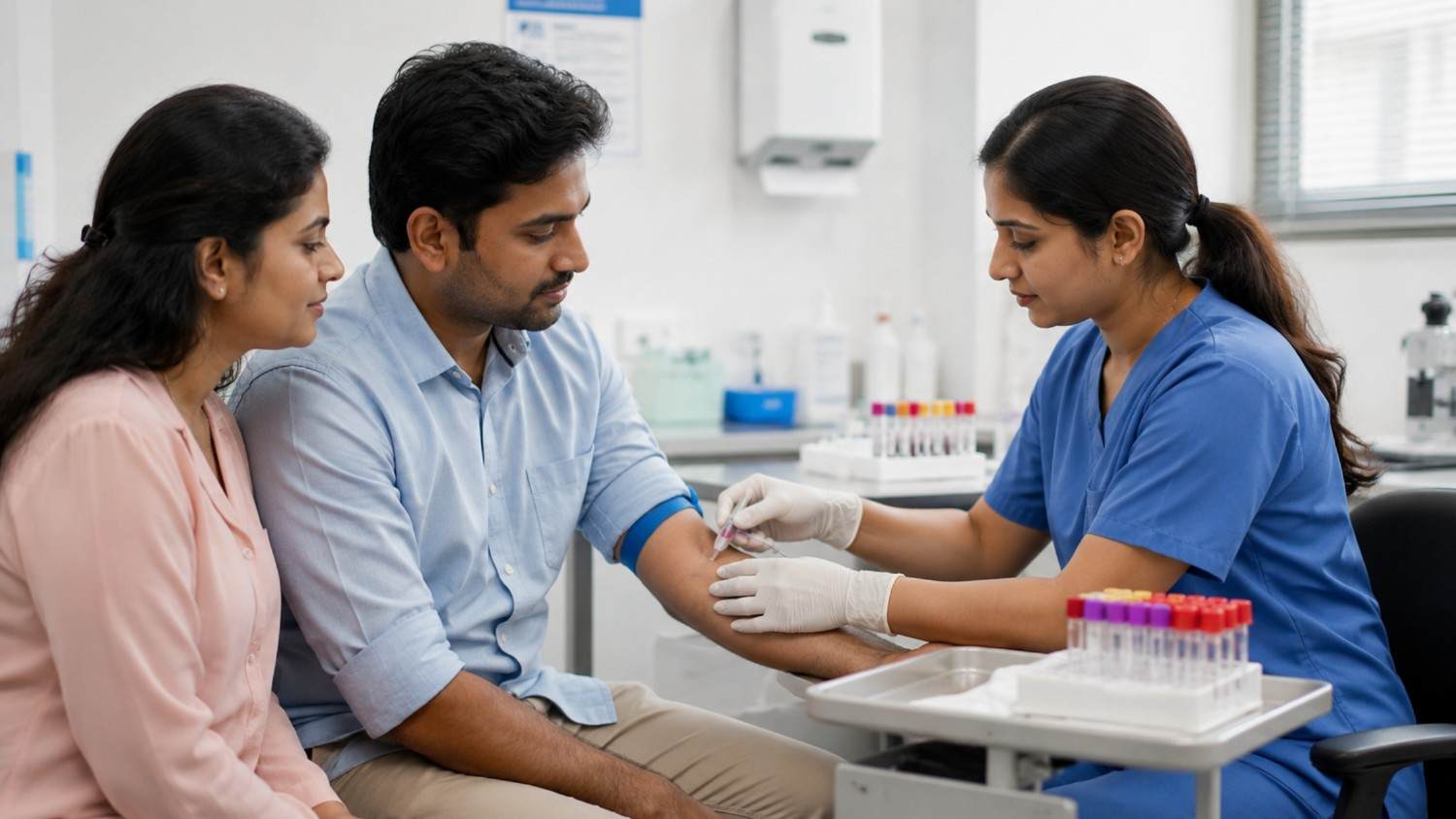
| Semen analysis | Male | Any day | Count, motility, morphology, volume |
| Blood sugar, vitamin D, thyroid | Both | Any day | General reproductive health tests |
That list is usually enough to place you in one of the five categories above. Anything else should follow from those results rather than being bundled in upfront.
Female Testing, Cycle Day by Cycle Day
Early cycle
Early fertility tests in Bangalore are booked around your period for a reason: day 2 or 3 is the reference point, because hormone levels are most comparable then. FSH and LH are drawn together, since the ratio between them carries information neither does alone. The same visit usually includes a transvaginal scan counting antral follicles, which pairs with AMH as a picture of ovarian reserve.
AMH itself can be tested any day, which surprises people; it’s stable across the cycle. What it doesn’t tell you is egg quality, and that distinction matters. A woman of 41 with a healthy AMH still faces the egg-quality decline of age.
Mid and late cycle
Tubal testing sits after bleeding stops and before ovulation, so no early pregnancy is disturbed. HSG uses X-ray dye; saline sonosalpingography uses ultrasound and avoids radiation. Both cause cramping for a few minutes, and a plain painkiller an hour beforehand is standard advice.
A progesterone level roughly a week before your period is the simplest confirmation of ovulation. It’s cheap, often skipped, and frequently the single most useful number in a full fertility assessment in Bangalore.
Male Testing: The One That Gets Delayed
Semen analysis should be part of the first round of infertility testing in Bangalore, not the second. It’s inexpensive, non-invasive, and identifies or excludes a factor present in a large share of couples.
Reading the report
Current international reference limits sit around 1.4 ml volume, 16 million sperm per millilitre, about 39 million total, roughly 30 percent progressive motility and 4 percent normal forms. These come from fertile populations and are not pass marks. Men below them conceive naturally; men above them sometimes don’t.
One abnormal result means very little on its own. Counts drop after fever, illness, poor sleep, heat exposure and periods of heavy stress, so a repeat after six to twelve weeks is standard before anyone changes the plan.
When more male testing is justified
Hormone testing, scrotal ultrasound, genetic studies or sperm DNA fragmentation testing become reasonable when counts are very low or absent, when there’s a varicocele or previous surgery, or after failed cycles. A fertility specialist in Bangalore should explain what each extra test would change before you pay for it.
Tests You Probably Don’t Need Yet
Over-testing is a real problem, and some of it is sold aggressively. Approach these with questions rather than enthusiasm:
• TORCH panels: routinely ordered, rarely useful for infertility unless there’s a specific history
• Immunological or NK cell testing: evidence remains contested; not a routine step
• Thrombophilia screening: relevant after recurrent losses, not for a first assessment
• Endometrial receptivity assays: reserved for repeated failed embryo transfers
• Routine karyotyping: indicated in severe male factor or recurrent miscarriage, not universally
• Diagnostic laparoscopy for everyone: it’s surgery, and needs a clear indication
Ask a simple question about any suggested extra: if this comes back abnormal, what changes? If nobody can answer, the test isn’t ready to be ordered. A careful fertility specialist in Bangalore will usually talk you out of half the panel a lab tries to sell you.
What Fertility Tests in Bangalore Cost
All figures for fertility tests in Bangalore below are indicative and vary by hospital and lab. A day 2–3 hormone panel typically runs into a few thousand rupees, AMH being the priciest single item in it. A transvaginal ultrasound sits in the low thousands. HSG or sonosalpingography usually costs a few thousand more including the procedure charge. Semen analysis is normally the cheapest test in the workup, often a few hundred to a thousand rupees.
Bundled packages for infertility testing in Bangalore can be good value, but read what’s inside. Some include tests from the previous section that you don’t need, and some exclude tubal testing, the one most people actually require. Check whether insurance covers investigations at your hospital too, since policies that exclude fertility treatment sometimes still cover diagnostic reproductive health tests in Bangalore.
From Infertility Diagnosis in Bangalore to a Treatment Plan
Aninfertility diagnosis in Bangalore should arrive with a recommendation attached, not as a set of printouts pushed across a desk. Anovulation usually means ovulation induction first. Blocked tubes push you towards IVF. Severe male factor points to ICSI. A polyp or submucous fibroid may need hysteroscopic correction before anything else. Around one couple in five gets told everything looks normal, which is unexplained infertility, and treatment still helps many of them.
Ask for the reports in writing, keep them dated in one folder, and take them to any second opinion. Repeating reproductive health tests in Bangalore because paperwork went missing wastes both money and cycles.
Why Choose Shanbhag Hospital for Fertility Testing in Bangalore?
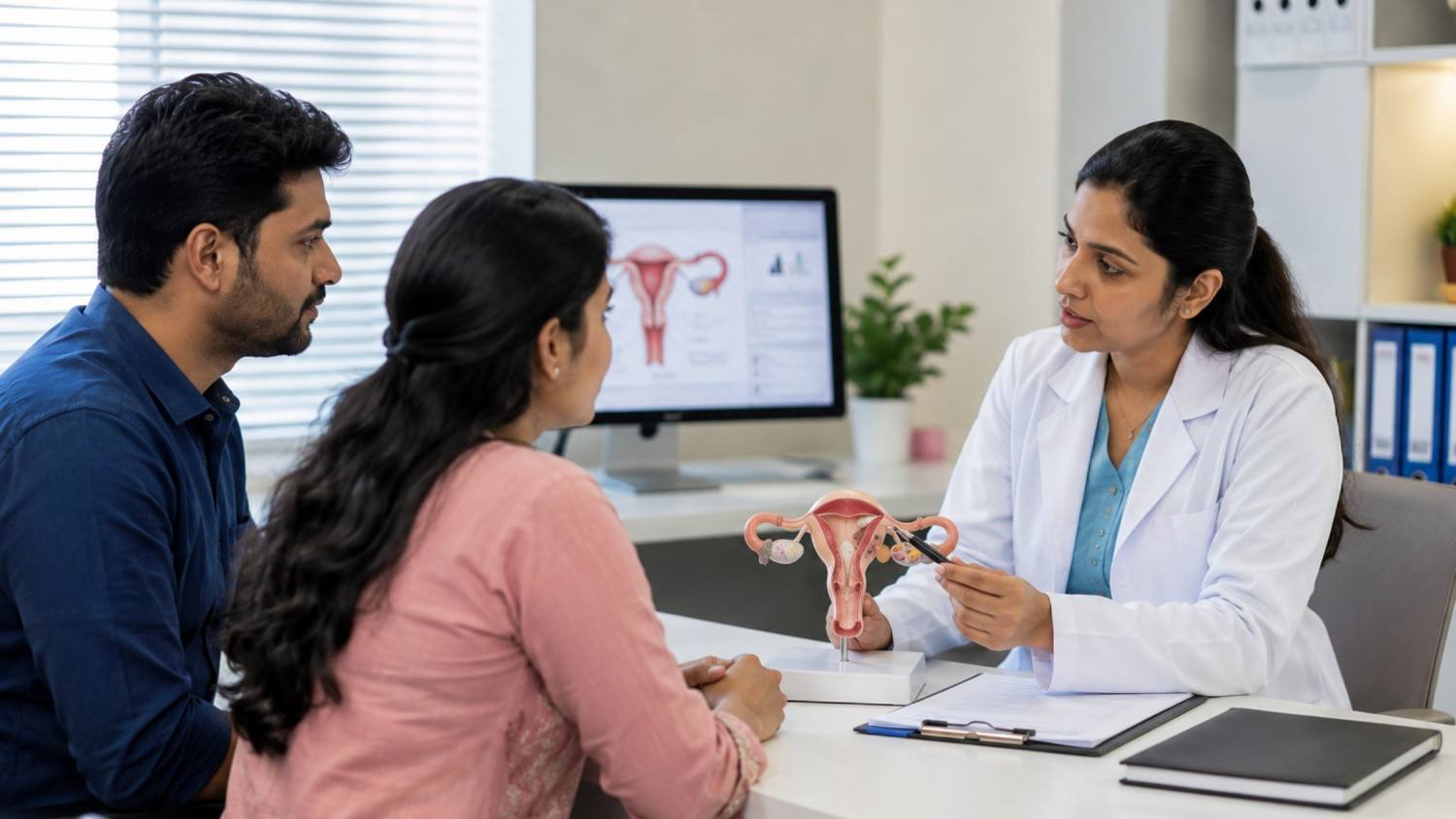
Choosing a hospital for fertility testing involves more than simply looking at the number of tests available. Shanbhag Hospital provides a hospital-based setting where couples can seek fertility evaluation, appropriate diagnostic testing and specialist guidance. A structured assessment can help determine which investigations are relevant to the couple rather than encouraging unnecessary testing. Clear communication about test timing, results, treatment implications and follow-up can also help couples make informed decisions throughout the fertility journey.
Frequently Asked Questions
Which fertility tests in Bangalore should we do first?
Start with day 2–3 hormones, thyroid and prolactin, a pelvic ultrasound and a semen analysis, then add tubal testing once those come back. This first round of infertility testing in Bangalore answers most questions for most couples, and everything else should follow from what it shows.
Do we need to test on a particular day of the cycle?
Some tests, yes. FSH and LH need day 2 or 3, progesterone needs the week before your period, and tubal testing sits after bleeding stops but before ovulation. AMH, thyroid, prolactin and semen analysis can be done on any day, which is why the workup takes a few weeks overall.
Is a single abnormal semen analysis a diagnosis?
No. Sperm parameters fluctuate considerably with illness, fever, sleep, heat and stress. Standard practice is to repeat the test after six to twelve weeks before drawing conclusions. Only a repeatedly very low or absent count justifies moving quickly to hormonal, genetic or surgical evaluation.
What if everything comes back normal?
That’s unexplained infertility, and it’s a real category rather than a failure of testing. It means current tools can’t identify the problem, not that there isn’t one. Many of these couples conceive with ovulation induction and IUI, and IVF remains available if simpler options don’t work.
Conclusion
Good testing is targeted testing. A focused round of fertility tests in Bangalore across both partners, timed to the right cycle days and read by someone who explains what each result changes, will usually place you in a clear category within a month or so. That’s the point of the exercise. It isn’t about collecting numbers; it’s about narrowing five possible problems down to the one or two that apply to you, so treatment starts from evidence. Shanbhag Hospital can support couples seeking appropriate fertility assessment and specialist guidance.
This article is general information and not a substitute for medical advice; please consult a qualified doctor about your own situation. If you’re unsure which tests are worth doing, Shanbhag Hospital can help you take the next step with an appropriate fertility consultation and diagnostic plan. Contact Shanbhag Hospital today to discuss your fertility concerns and schedule a consultation. Follow Shanbhag Hospital on Instagram for fertility information, health updates and practical guidance for couples exploring reproductive care.