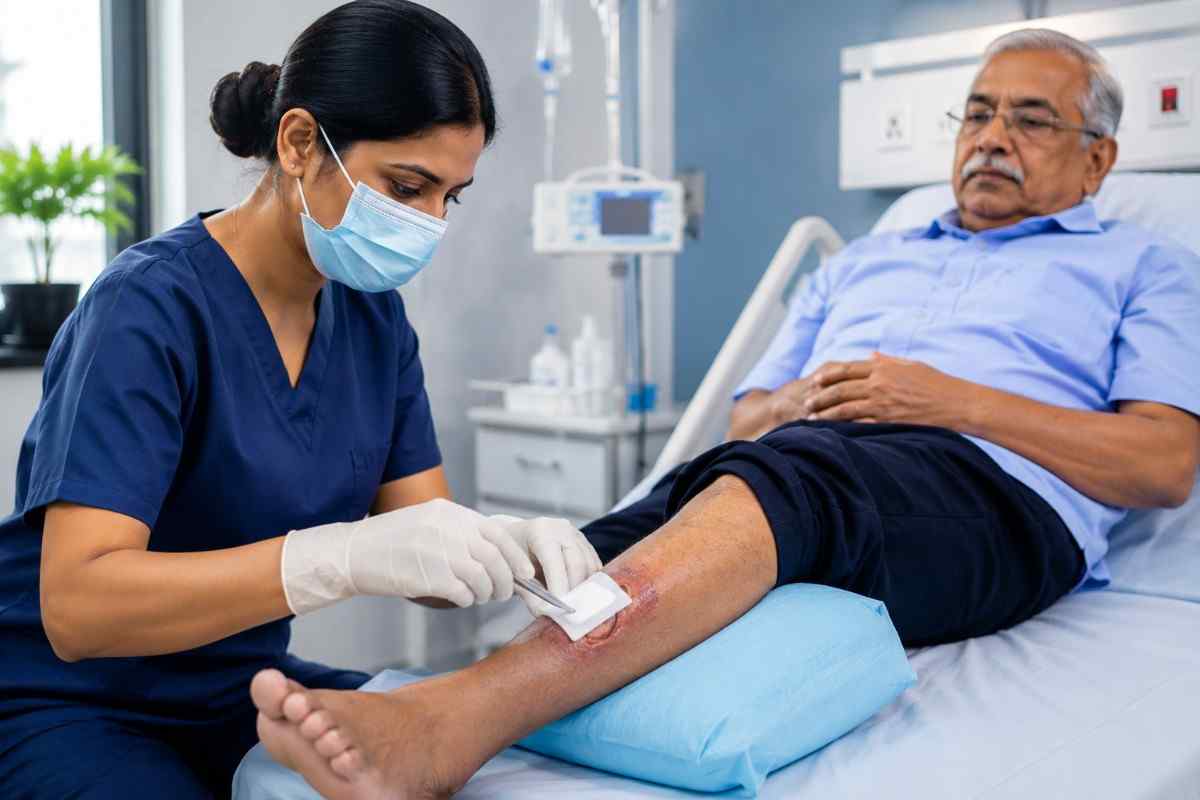
For most people, a small cut on the foot or a blister from a new pair of shoes is forgotten within a week. For someone with diabetes, the same small wound can quietly become a serious problem. What starts as a barely noticeable mark on the heel or a tiny crack between the toes can — within weeks — turn into a stubborn ulcer that refuses to heal, an infection that travels deeper than expected, and in the worst cases, a hospitalisation that no one anticipated. This is why diabetic wound care in Bangalore isn’t a niche specialty. It’s an essential, time-sensitive branch of medical care that every person living with diabetes — and every family member caring for one — should understand.
This guide walks through why diabetic wounds behave differently, when to be concerned, what modern wound care actually involves, and how the right specialist team can prevent small problems from becoming life-changing ones.
Why Diabetic Wounds Don’t Heal Like Ordinary Wounds
In a person without diabetes, a small cut typically heals within 5–10 days. The body sends blood, fights bacteria, builds new tissue, and the wound closes. In diabetes, several things go wrong simultaneously:
| Factor | What Happens |
| Poor circulation | Reduced blood flow to the feet means less oxygen and fewer healing nutrients reach the wound |
| Neuropathy (nerve damage) | Reduced sensation; minor injuries go unnoticed for days |
| High blood sugar | Slows the immune response and promotes bacterial growth |
| Weak immunity | White blood cells function poorly in chronic high-sugar states |
| Altered foot mechanics | Pressure points develop, especially under the heel and ball of foot |
| Dry skin | Cracks easily, creating entry points for infection |
| Reduced collagen formation | Impairs the basic biology of tissue repair |
Add these together and you have wounds that take weeks instead of days, infections that spread quickly, and patients who often don’t realise the seriousness until significant damage has occurred.
Common Types of Diabetic Wounds
• Foot ulcers — most common; usually under the heel, ball, or toes
• Leg ulcers — often related to circulation problems
• Pressure sores — from prolonged sitting or lying down
• Surgical wound complications — wounds that don’t heal post-surgery
• Burn injuries — sometimes unnoticed due to neuropathy
• Cracks and fissures — between toes or on heels
• Insect bites that worsen instead of healing
• Post-traumatic wounds — from minor cuts and abrasions
The American Diabetes Association resource on diabetic foot care and the Cleveland Clinic guide on diabetic ulcers provide further reading.
Warning Signs That Need Immediate Attention
Diabetic wounds rarely look as serious as they are. Visit a wound care specialist quickly if you notice:
• A wound, blister, or callus that hasn’t started healing in 3–5 days
• Increasing redness, warmth, or swelling around a wound
• Pus, foul smell, or discharge
• Black or dark tissue forming at the edges or base
• Pain that worsens (or paradoxically, no pain in a clearly serious wound)
• Fever or chills
• High blood sugar levels coinciding with wound deterioration
• A wound that keeps coming back at the same site
• Numbness or tingling around the wound area
These signs may indicate infection, deeper tissue involvement, or compromised circulation — all of which need prompt medical care.
How Diabetic Wounds Are Properly Evaluated
A complete wound assessment goes far beyond just looking at the surface. At a quality wound care centre, evaluation includes:
1. Detailed clinical examination — wound size, depth, base, edges, surrounding skin
2. Wound staging (Wagner / University of Texas classification)
3. Vascular assessment — pulses, capillary refill, ankle-brachial index (ABI)
4. Neurological evaluation — sensation testing using monofilament and tuning fork
5. Blood tests — sugar control (HbA1c), kidney function, infection markers, vitamin levels
6. Wound swab — for bacterial culture and sensitivity if infection suspected
7. X-ray of the affected area — to rule out underlying bone involvement
8. MRI — for suspected deep infection or osteomyelitis
9. Doppler ultrasound — for blood flow assessment
10. Specialist referrals — to vascular surgeon, endocrinologist, or orthopaedic specialist as needed
Modern Diabetic Wound Care: A Multi-Pronged Approach
Effective wound care isn’t a single intervention — it’s a coordinated set of measures working together.
1. Blood Sugar Control
The single most important factor. Without good glycaemic control, no amount of advanced dressing will heal a diabetic wound. Most patients need:
• HbA1c targets of 7–8%
• Stable daily sugar readings
• Sometimes temporary insulin during active wound healing
• Endocrinologist coordination
2. Wound Bed Preparation
Using the TIME principle:
• Tissue — removal of dead tissue (debridement)
• Infection control — antibiotics, antiseptics, antimicrobial dressings
• Moisture balance — keeping the wound neither too wet nor too dry
• Edge advancement — promoting healthy tissue growth
3. Advanced Dressings
| Dressing Type | When Used |
| Hydrocolloid | For lightly draining, shallow wounds |
| Foam dressings | For moderate exudate |
| Alginate dressings | For heavily draining wounds |
| Antimicrobial silver dressings | For infected or high-risk wounds |
| Hydrogel | For dry, sloughy wounds |
| Negative pressure wound therapy (NPWT/VAC) | For complex, deep wounds |
4. Offloading
Reducing pressure on the wound is critical, especially for foot ulcers:
• Total contact casts
• Removable cast walkers
• Custom diabetic footwear
• Crutches or wheelchair use temporarily
• Bed rest in selected severe cases
5. Vascular Intervention
If circulation is poor, no dressing alone will heal the wound. Options include:
• Angioplasty
• Bypass surgery
• Stenting
• Medical optimisation of blood flow
6. Surgical Care
For deep infections, gangrene, or extensive tissue damage:
• Surgical debridement
• Drainage of abscesses
• Bone resection (for osteomyelitis)
• Skin grafting
• Reconstructive flap surgery
• Targeted amputation (last resort, but sometimes life-saving)
7. Adjunctive Therapies
• Hyperbaric oxygen therapy — increases oxygen delivery to wound tissue
• Growth factor applications
• Skin substitutes
• Platelet-rich plasma (PRP) in selected cases
The NIH resource on diabetic wound healing and the Mayo Clinic guide on diabetic foot care provide additional reading.
When Hospitalisation Becomes Necessary
Some diabetic wounds need inpatient care:
• Spreading cellulitis or systemic infection
• Wet gangrene
• Deep abscesses
• Osteomyelitis (bone infection)
• Severe ischaemia requiring vascular intervention
• Patients with uncontrolled diabetes alongside infection
• Wounds requiring frequent surgical debridement
• Sepsis or unstable vitals
Hospital-based care typically combines IV antibiotics, surgical management, blood sugar stabilisation, and intensive wound care.
Why Choose Ananya Hospitals for Diabetic Wound Care
Ananya Hospitals approaches diabetic wound care as the multi-specialty challenge it really is — not just a dressing-room exercise. Patients across Bengaluru choose us because:
• Senior physicians and surgeons experienced in diabetic wound management
• Multi-disciplinary coordination — endocrinology, vascular surgery, orthopaedics, plastic surgery, infectious disease
• Modern dressing protocols including silver, alginate, hydrocolloid, and foam dressings
• Negative pressure wound therapy capability for complex wounds
• Doppler and vascular assessment in-house
• Surgical debridement and reconstructive surgery when needed
• Endocrinologist-led blood sugar optimisation
• Diabetic foot screening and prevention programmes
• Patient and family education on long-term wound prevention
• Cashless insurance support
Our diabetic wound care services are structured around long-term healing — not just temporary symptom management.
Daily Wound Care at Home — What to Get Right
Your role between hospital visits is critical. Follow these basics:
• Change dressings exactly as instructed
• Keep the wound clean and dry between dressings
• Don’t use home remedies — turmeric, oils, traditional pastes can worsen wounds
• Monitor blood sugar 3–4 times a day during active wound healing
• Eat a high-protein, balanced diet
• Stop smoking — major impediment to wound healing
• Wear prescribed offloading footwear consistently
• Inspect feet daily, including soles and between toes
• Avoid soaking feet in hot water
• Report any new redness, swelling, or odour immediately
Preventing the Next Diabetic Wound
Once you’ve had one diabetic wound, the risk of another is high. Prevention strategies:
• Daily foot inspection (use a mirror or family member’s help)
• Wash feet with lukewarm water; pat dry, especially between toes
• Apply moisturiser — but not between toes
• Trim toenails straight across; avoid digging into corners
• Never walk barefoot, even at home
• Wear well-fitting, soft shoes
• Avoid heating pads, hot water bottles on feet
• Schedule regular podiatry / diabetic foot screenings
• Keep blood sugar consistently controlled
• Manage blood pressure, cholesterol, and weight
• Quit smoking permanently
FAQs
Q1. How long does a diabetic wound take to heal?
Simple, well-managed wounds heal in 4–8 weeks. Complex or infected wounds may take 3–6 months. Some chronic wounds need long-term coordinated care.
Q2. Can a diabetic wound heal on its own?
Small, very superficial wounds may heal with home care, but any wound that hasn’t shown improvement in 3–5 days needs medical evaluation.
Q3. What’s the most important factor in healing?
Blood sugar control. Without it, even the most advanced dressings will struggle to work.
Q4. Are home remedies safe for diabetic wounds?
No. Turmeric pastes, oils, and traditional remedies can introduce infection, mask warning signs, and significantly delay proper healing.
Q5. Will I need surgery for my wound?
Most diabetic wounds heal with structured medical care. Surgery is reserved for deep infections, gangrene, or wounds that aren’t responding to dressings.
Q6. Can hyperbaric oxygen therapy really help?
For selected complex, non-healing wounds, yes — it can significantly accelerate healing by improving oxygen delivery to the wound bed.
Q7. Should I see a wound specialist if my regular doctor is treating me?
If a wound hasn’t improved in 2–3 weeks despite standard care, a specialist evaluation is strongly recommended. Early specialist input prevents complications.
Q8. Is amputation always the end result?
No — modern wound care has dramatically reduced amputation rates. With early specialist care, most diabetic wounds can be saved.
Q9. Does insurance cover diabetic wound care?
Most major plans cover hospitalisation, surgery, dressings, and consultations. Outpatient dressing costs may vary.
Q10. How do I find the best diabetic wound care in Bangalore?
Look for a multi-specialty hospital with experienced wound care teams, modern dressing options, vascular and surgical support, and structured follow-up — exactly what Ananya Hospitals offers.
Conclusion
Best diabetic wound care in Bangalore is one of those areas where time matters more than almost anywhere else in medicine. A wound that gets proper attention in week one is dramatically easier to heal than the same wound in week six. Modern wound care — combining tight blood sugar control, advanced dressings, vascular optimisation, and timely surgical intervention — can save not just limbs, but lives.
If you or a family member has a diabetic wound that isn’t healing, please don’t wait for it to “settle on its own.” A specialist consultation today often prevents weeks or months of complications later.
Book Your Consultation at Ananya Hospitals
Talk to our senior diabetic wound care team in Bengaluru. We’ll assess the wound carefully, coordinate the right specialists, and design a healing plan that gives your wound the best chance of complete recovery.
Call us or book an appointment online. Visit: Ananya Hospitals, Bangalore Service: Diabetic Wound Care
Healing wounds. Saving limbs. Protecting lives.