Discovering a lump in your stomach is one of the most unsettling moments a person can have. You’re showering, or stretching, or pressing on a sore spot, and your fingers find something firm or rounded that wasn’t there last month. The mind races. Within seconds, anyone with internet access has self-diagnosed a dozen frightening possibilities. The truth, though, is far more reassuring: most abdominal lumps are not cancer, and almost all of them are treatable when evaluated properly. What you need is a calm, experienced stomach lump specialist in Bangalore — not panic.
This guide is built to slow your heart rate down. We’ll explain the common causes of abdominal lumps, how doctors actually evaluate them, what tests are involved, and when treatment — usually a quick, laparoscopic procedure — is the right next step. Information replaces fear. Let’s get to it.
What Is a Stomach Lump?
In medical language, a stomach or abdominal lump means any abnormal swelling, mass, bulge, or bump felt in the area between your chest and pelvis. It can be:
- Soft or hard
- Mobile or fixed
- Painful or without discomfort
- Visible or only palpable
- In the upper, middle, or lower abdomen
- Constant or coming and going
Each of these features helps the specialist narrow down the cause. That’s why a careful examination is more valuable than rushing into a single test.
Common Causes of Abdominal Lumps
Here are the conditions that most often turn out to be the culprit:
| Category | Examples | Notes |
| Hernias | Inguinal, umbilical, incisional, epigastric | Most common; bulge changes with cough or strain |
| Lipomas | Benign fatty tumour under skin | Soft, mobile, slow-growing |
| Sebaceous cysts | Skin gland blockage | Usually small, with a central pore |
| Lymph nodes | Reactive or infected | Common in groin |
| Liver, kidney, spleen, ovarian masses | Cysts, fibroids, tumours | Felt deeper in the abdomen |
| Diverticular abscess | Pocket of infection in bowel wall | Often uncomfortable |
| Mesenteric cyst / lymphangioma | Fluid-filled internal cysts | Mostly benign |
| Gallbladder distension | Often from blocked stones | Right upper quadrant |
| Bowel tumours | Benign or malignant | May cause bowel symptoms |
| Endometriosis nodules (in women) | Linked to menstrual cycle | Cyclical discomfort |
| Aortic aneurysm | Bulging artery | Pulsatile, requires urgent care |
The MedlinePlus resource on abdominal mass lists most of these and their typical features.
When Should You See a Stomach Lump Specialist?
Some lumps need immediate evaluation; others can be assessed in a routine appointment. See a specialist promptly if you notice:
- A new lump that persists for more than 2 weeks
- A lump that’s growing
- A lump that’s hard, fixed, or irregular
- Lumps associated with weight loss, fever, or night sweats
- A bulge that changes with coughing or lifting (likely hernia — should be evaluated calmly)
- Lumps that are uncomfortable or warm to touch
- A pulsatile lump in the centre of the abdomen (urgent — possible aneurysm)
- Lumps in the groin or near scars from previous treatment
If a lump is suddenly very uncomfortable, hard, and you can’t push it back in — that may be a strangulated hernia. Go to the emergency room.
How a Stomach Lump Specialist Evaluates You
A good evaluation is layered and methodical:
1. Detailed History
The specialist will ask:
- When did you first notice it?
- Has it grown?
- Does it change with movement, eating, or position?
- Any discomfort, fever, or weight changes?
- Any family history of cancers, hernias, or thyroid disease?
- Treatment history — previous abdominal procedures?
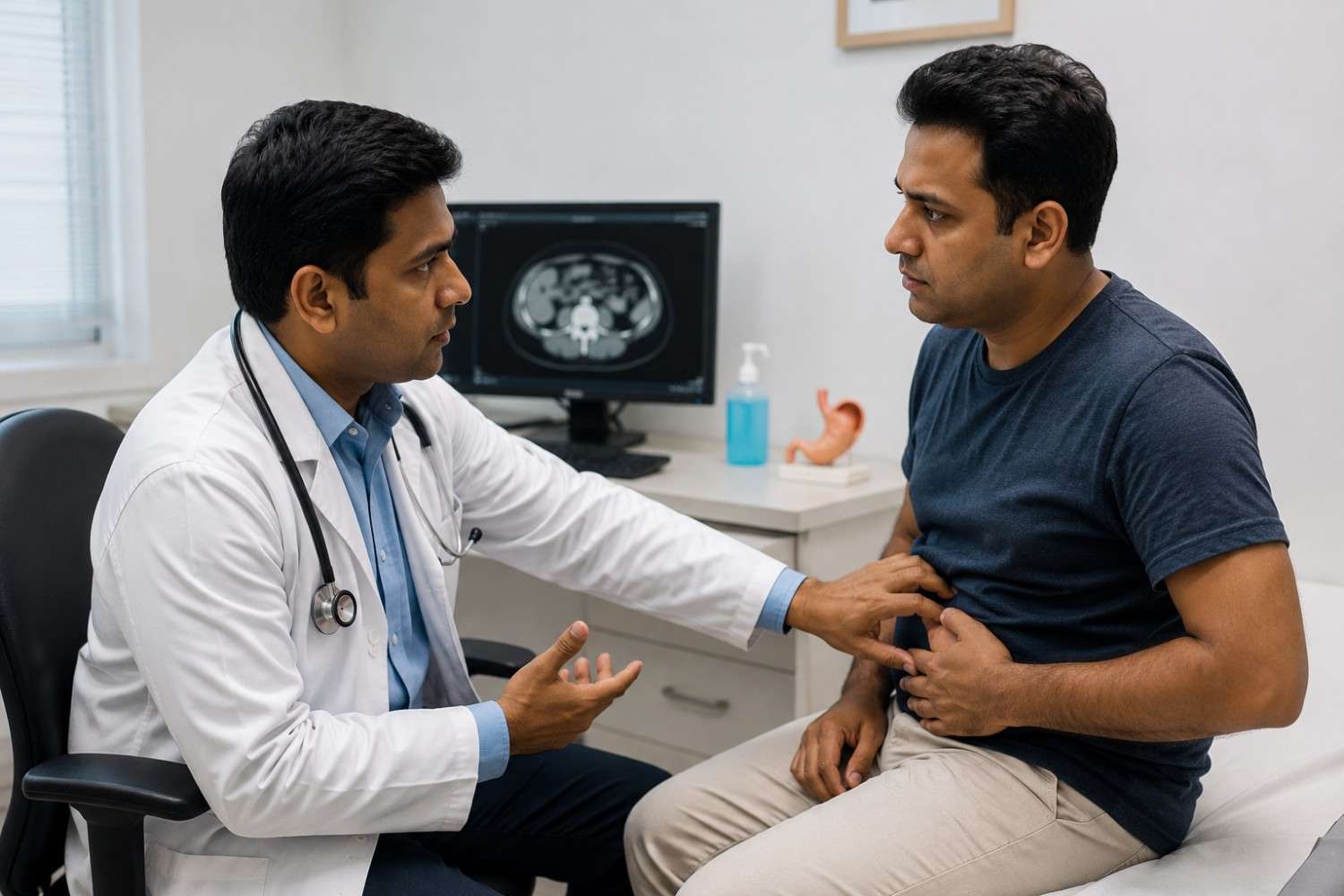
2. Physical Examination
The doctor will palpate (feel) the lump from different angles, assess size, mobility, tenderness, and check whether it’s connected to skin, muscle, or deeper structures. Lymph nodes elsewhere may also be examined.
3. Imaging Tests
Depending on the findings:
- Ultrasound (USG) — usually first-line, especially for superficial lumps
- CT scan of abdomen — for deeper or unclear masses
- MRI — for soft tissue lumps and pelvic lesions
- Doppler study — if a vascular cause is suspected
- Endoscopy / colonoscopy — if bowel-related
4. Blood Tests
- Complete blood count, ESR, CRP
- Liver and kidney function
- Tumour markers (only when clinically indicated, never routinely)
5. Biopsy or FNAC
If there’s any suspicion of a tumour, a small needle sample (Fine Needle Aspiration Cytology) or biopsy gives the definitive diagnosis.
A reliable specialist won’t jump to “this might be cancer” lightly. Statistically, most abdominal lumps are benign. The job is to confirm exactly which one yours is.
Lumps That Are Usually Benign
Reassuringly, several common lumps are almost always non-cancerous:
- Lipomas — soft, mobile, fatty lumps
- Sebaceous cysts — superficial skin lumps
- Hernias — bulges of fat or bowel through muscle defects
- Reactive lymph nodes — often appear with infections, regress on their own
- Functional ovarian cysts in women
- Uncomplicated mesenteric or splenic cysts
Even when treatment is recommended for these, it’s often a planned, day-care or short-stay procedure with full recovery in days.
When Treatment Is Recommended
Treatment isn’t always the answer for lumps. Watchful waiting, antibiotics, or hormonal management may be appropriate in some cases. Treatment becomes necessary when:
- The lump is growing or symptomatic
- It’s a hernia (always benefits from repair)
- The mass is suspicious for malignancy
- A biopsy shows a tumour that needs removal
- The lump is causing complications — obstruction, infection, bleeding
- Cosmetic or quality-of-life concerns are significant (e.g., large lipoma)
For abdominal masses, the Cleveland Clinic resource on abdominal tumours emphasises that earlier evaluation generally leads to simpler, less invasive treatment.
Modern Treatment Options for Abdominal Lumps
Whenever feasible, lumps are removed using minimally invasive techniques:
- Excision under local anaesthesia — for small, superficial lumps like lipomas and sebaceous cysts
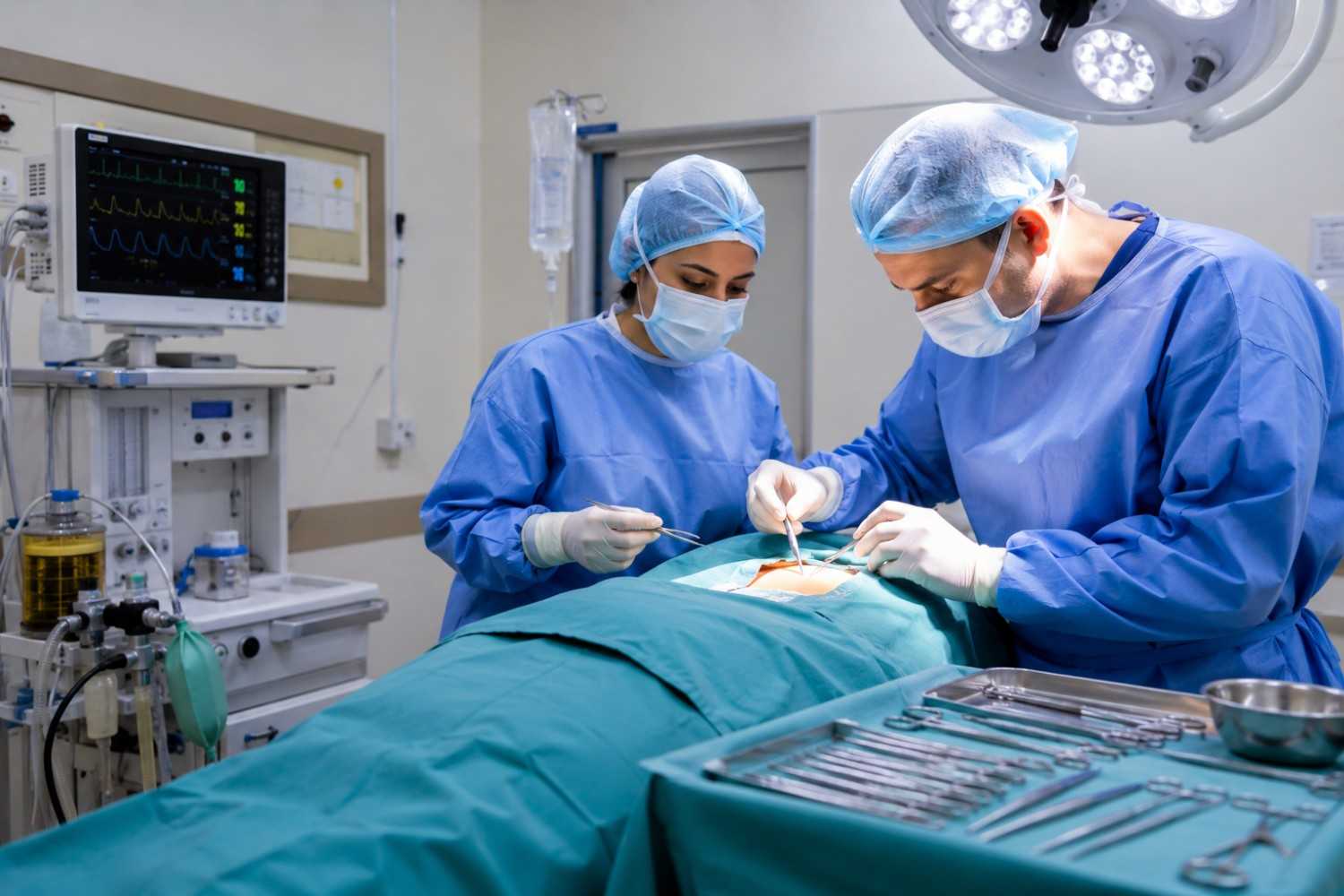
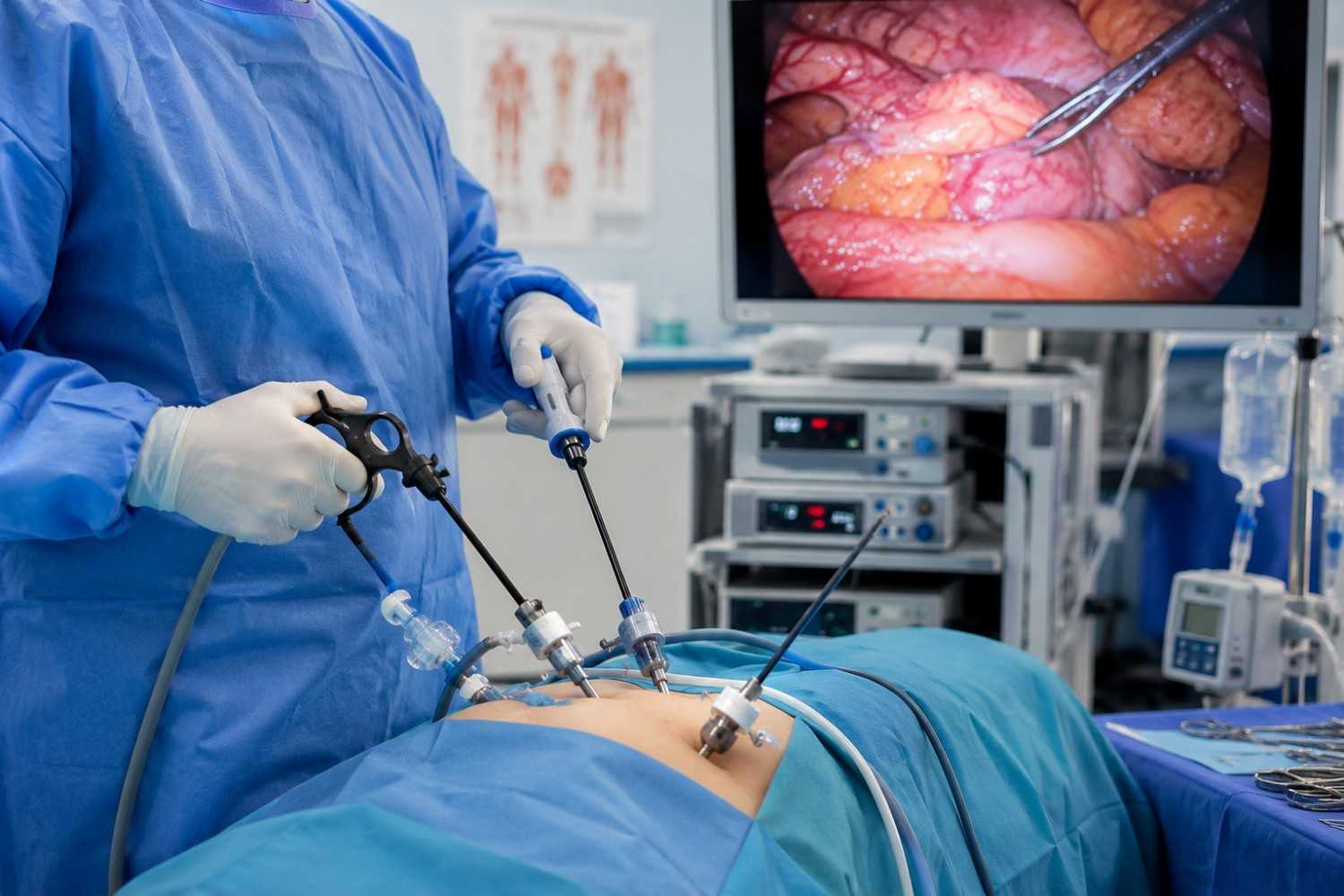
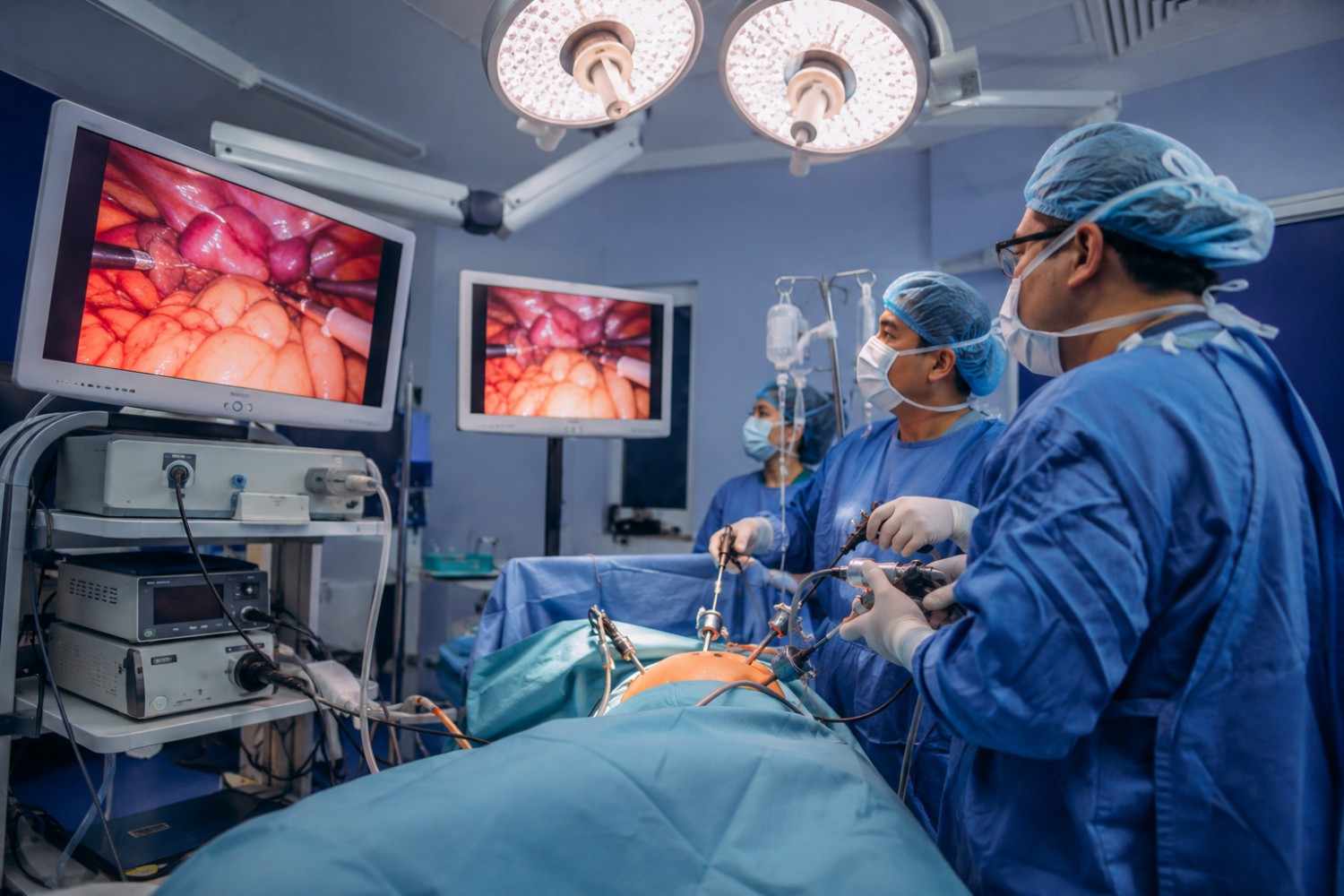
- Laparoscopic removal — for internal masses such as ovarian cysts, mesenteric cysts, or selected tumours
- Technology-assisted procedures — for complex internal lesions or those near vital structures
- Open procedures — reserved for large, complex, or infiltrating masses
Most lumps in Bangalore today are treated with day-care or single-night admissions.
What to Expect During Your Specialist Visit
Your first appointment usually includes:
- 20–30 minutes with the specialist for history and examination
- Same-day ultrasound if available in the hospital
- Blood tests ordered if relevant
- Clear plan — observe, investigate further, treat medically, or schedule treatment
You’ll leave with a written summary, prescriptions if needed, and a follow-up date. A good specialist explains things in everyday language and answers your questions without rushing.
Why Choose Ananya Hospitals as Your Stomach Lump Specialist
At Ananya Hospitals, evaluation of abdominal lumps is one of our most common consultations. Patients across Bengaluru rely on us because:
- Senior surgeons with extensive experience in benign and complex abdominal lumps
- In-house ultrasound, CT, MRI, and endoscopy for one-day workup
- Calm, unhurried consultations — no rushed appointments
- Honest, evidence-based recommendations — treatment only when truly needed
- Day-care and short-stay options for routine procedures
- Cashless insurance support for treatment cases
- Clear, written care plans for every patient
Our laparoscopic and general care team handles every stage — from initial examination to specialised treatment — under one roof.
Self-Care While You Wait for Your Appointment
While you arrange a consultation, the following help:
- Don’t massage or press the lump repeatedly
- Don’t apply heat or local “fixes” — they don’t shrink lumps
- Note any changes — size, discomfort, colour, position
- Avoid heavy lifting if you suspect a hernia
- Stay hydrated and well-rested
- Photograph the lump so changes can be tracked easily
FAQs
Q1. Is a stomach lump always serious?
Not at all. Most lumps are benign — fat deposits, hernias, lymph nodes, or simple cysts. Evaluation simply confirms what it is.
Q2. Which doctor should I see for an abdominal lump?
A general or laparoscopic specialist is the right starting point. They evaluate, investigate, and refer to oncology only if a tumour is confirmed.
Q3. Can a lump in the stomach go away on its own?
Some lumps — especially reactive lymph nodes or small inflammatory swellings — can resolve. But persistent or growing lumps need formal evaluation.
Q4. How is a stomach lump diagnosed?
Through clinical examination plus imaging — usually ultrasound, sometimes CT or MRI. Biopsy is done only when needed.
Q5. Will treatment for a lump leave a big scar?
Most lumps today are removed via small skin incisions or laparoscopic keyhole procedures, leaving minimal scarring.
Q6. How soon do I need to see a specialist if I find a lump?
Within 1–2 weeks for any persistent lump. Sooner if it’s uncomfortable, growing, hard, or associated with other symptoms.
Q7. Are hernias considered “lumps”?
Yes. A hernia is one of the most common causes of an abdominal lump and is fully treatable.
Q8. Does insurance cover lump removal procedures?
Most insurance plans cover medically indicated lump removal. Cosmetic-only excisions may not be covered.
Q9. Can I just get an ultrasound and skip the specialist?
You could, but interpretation matters. Many lumps need a clinical correlation that only a specialist can provide. Test results without context often create more anxiety than answers.
Q10. Where can I find an experienced stomach lump specialist near me in Bangalore?
Ananya Hospitals offers complete diagnostic and treatment care for abdominal lumps with senior, fellowship-trained general specialists.
Conclusion
The discovery of a stomach lump is alarming, but it’s almost never the disaster the internet may have suggested. With a thorough examination, the right scans, and an honest specialist guiding you, the path forward is usually clear within a single visit. Whether your lump is a hernia, a benign cyst, a lipoma, or something more complex, modern care in Bangalore handles every type of abdominal mass with precision, minimal scarring, and a quick return to normal life.
A reliable stomach lump specialist in Bangalore is the single best resource you can have at this moment — and that’s exactly what we offer at Ananya Hospitals.
Book Your Consultation at Ananya Hospitals
Don’t sit at home worrying. Get a clear, professional evaluation of that lump within 24 hours.
Call us orbook an appointment online. Visit: Ananya Hospitals, Bangalore Department: General & Laparoscopic Care
Information beats fear. Let’s get you both.