Hip pain has a way of slowly redrawing the boundaries of a person’s life. The morning walk gets shorter. Sitting cross-legged becomes uncomfortable. Climbing stairs requires a moment of mental preparation. Sleeping on one side is no longer possible. Bending forward to put on socks turns into a small daily ordeal. By the time most patients seriously consider hip replacement surgery in Bangalore, , they’ve usually been managing the pain for years — adjusting their activities, pushing through, and assuming that this is simply how aging feels. The truth is that hip replacement is one of the most successful surgeries in modern medicine, and for the right patient, it doesn’t just relieve pain — it gives back a way of living that they thought was lost.
This guide is built for patients and families considering hip replacement. We’ll walk through what causes hip arthritis, how surgery actually works, what modern techniques offer, and what recovery genuinely looks like.
When Is Hip Replacement Considered?
Hip replacement is typically recommended when:
- Daily activities are significantly restricted
- Pain disturbs sleep
- Walking distance is markedly reduced
- Conservative care over months has not helped
- X-rays show advanced arthritis or structural damage
- Quality of life is significantly impaired
Common diagnoses that lead to hip replacement:
| Condition | What’s Happening |
| Osteoarthritis | Wear-and-tear of cartilage; most common cause |
| Rheumatoid arthritis | Immune-mediated joint destruction |
| Avascular necrosis (AVN) | Loss of blood supply to femoral head |
| Hip dysplasia | Abnormally shaped hip joint |
| Post-traumatic arthritis | After previous hip injury or fracture |
| Femoral neck fracture in elderly | Often needs replacement instead of fixation |
| Failed prior hip surgery | Revision hip replacement |
| Ankylosing spondylitis | Inflammatory hip involvement |
The Cleveland Clinic guide on hip replacement and the Mayo Clinic resource provide further reading.
What Modern Hip Replacement Actually Involves
In a total hip replacement, the surgeon:
- Removes the worn-out ball (femoral head) of the thigh bone
- Reshapes the socket (acetabulum) of the pelvis
- Implants a new metal stem in the thigh bone
- Attaches a new ball (often metal or ceramic)
- Fits a new socket (often metal with a plastic/ceramic liner)
- Tests stability and motion before closing
Modern implants are durable, biocompatible, and typically last 15–25 years.
Types of Hip Replacement
1. Total Hip Replacement (THR)
Replaces both the ball and socket. The most common type. Suitable for advanced arthritis.
2. Hip Resurfacing
Caps the femoral head rather than removing it. Suitable for selected younger patients with strong bone.
3. Partial Hip Replacement (Hemiarthroplasty)
Replaces only the ball, used commonly for elderly femoral neck fractures.
4. Bilateral Hip Replacement
Both hips replaced — either simultaneously (single-stage) or in a staged fashion (one hip first, then the other).
5. Revision Hip Replacement
Replacement of a previously implanted hip prosthesis when it has loosened, infected, or worn out.
Modern Surgical Approaches
The “approach” refers to where and how the surgeon enters the hip joint:
| Approach | Highlights |
| Posterior approach | Most common; reliable, well-established |
| Direct anterior approach | Muscle-sparing; faster early recovery in selected patients |
| Lateral / antero-lateral approach | Strong stability profile |
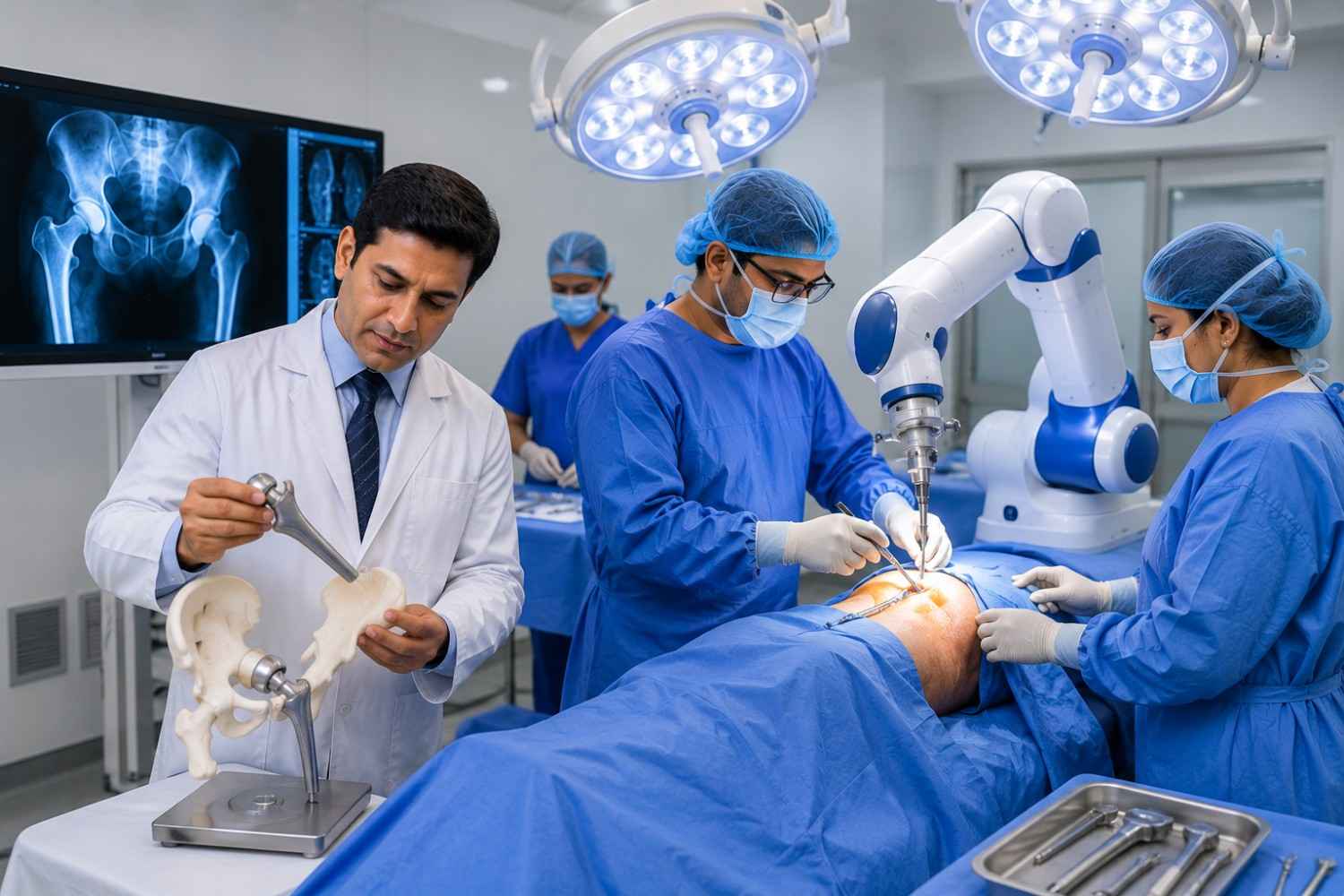
| Computer-guided approach | Guidance for precise implant positioning |
Each approach has its own advantages. A senior surgeon recommends the right one for your specific case based on anatomy, body type, bone quality, and overall health.
Computer-Guided Hip Replacement: Is It Worth It?
Computer-guided systems offer:
- Pre-operative 3D planning based on CT imaging
- Assisted bone preparation
- Real-time accuracy feedback during surgery
- Precise implant alignment
For selected complex cases, computer-guided hip replacement offers genuine advantages. For routine cases, traditional hip replacement by an experienced surgeon delivers excellent outcomes.
Why Choose Ananya Hospitals for Hip Replacement
Ananya Hospitals is recognised across Bengaluru and Karnataka for excellent hip replacement outcomes. Patients choose us because:
- Senior hip surgeons with sub-specialty fellowship training
- High-volume hip replacement practice
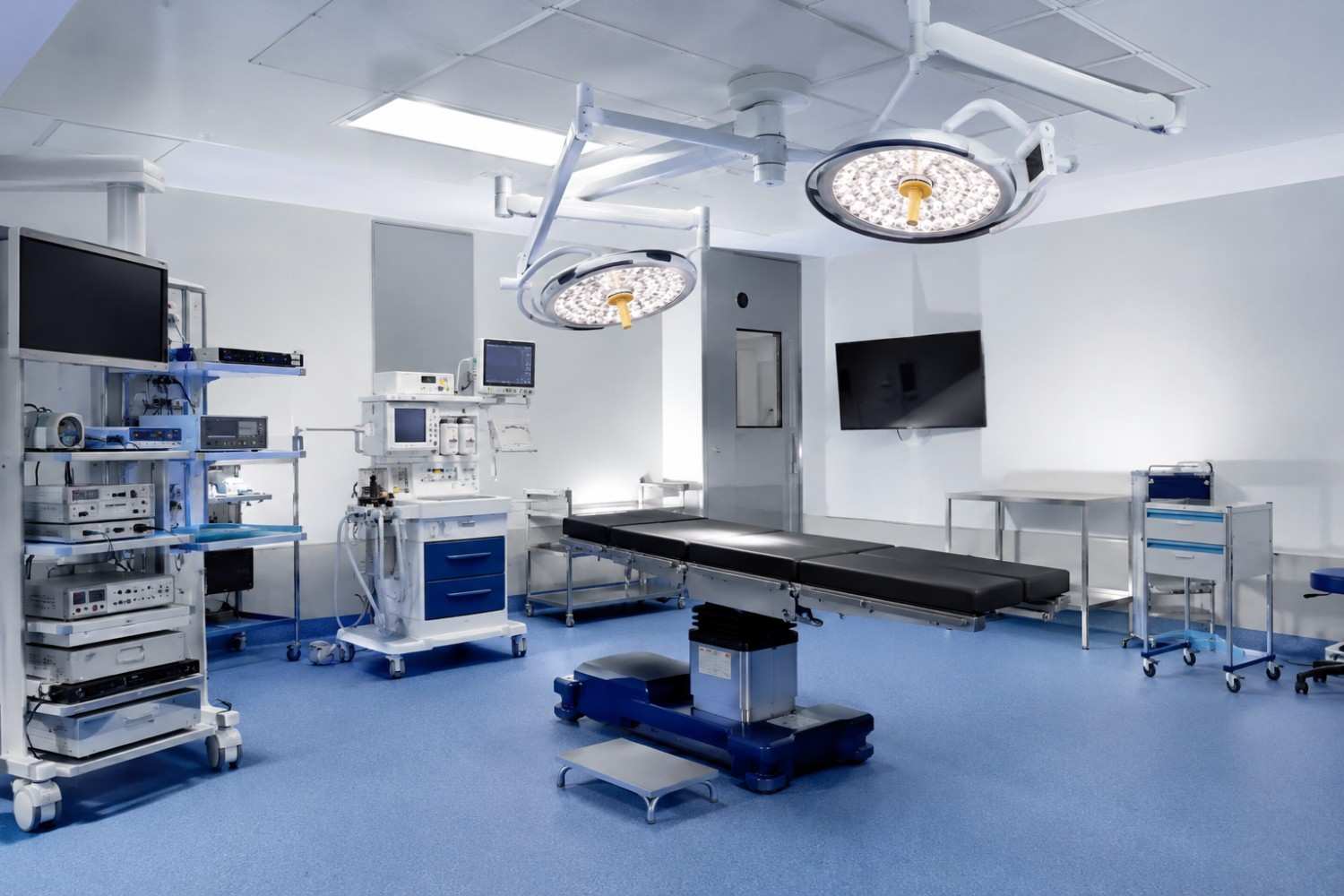
- Modern laminar airflow OTs — essential for joint replacement
- Multiple surgical approaches (posterior, direct anterior, computer-guided)
- Premium and standard implant options — clearly explained
- Multi-disciplinary teams for elderly patients
- In-house ICU and physician support for complex cases
- Dedicated physiotherapy with structured rehab plans
- Transparent, written cost estimates
- Cashless insurance support with all major TPAs
- Patient-friendly multilingual counselling
Our orthopedics & joint care department treats hip replacement with the rigour, planning, and humanity it deserves.
What Pre-Operative Workup Includes
A thorough pre-op assessment ensures safe surgery:
- Detailed clinical evaluation
- Standing X-rays of pelvis and both hips
- MRI when indicated (e.g., AVN, suspected soft tissue issues)
- Blood tests (CBC, sugar, kidney/liver function, ESR, CRP)
- ECG, echocardiogram (in selected patients)
- Anaesthesia consultation
- Physician clearance for those with diabetes, hypertension, heart disease
- Dental clearance (to rule out infection sources)
- Insurance pre-authorisation
A streamlined hospital handles all of this within 2–3 days.
What Hospital Stay Looks Like
- Day 0 (surgery day) — Surgery in morning; recovery in evening; light fluids
- Day 1 — Walking with walker support; gentle physiotherapy begins
- Day 2 — Walking longer distances; using bathroom independently
- Day 3–4 — Discharge home in most cases (sometimes earlier with anterior approach)
Most patients are climbing a few stairs with assistance before discharge.
Recovery at Home: A Realistic Timeline
| Time | What’s Possible |
| Week 1 | Walking with walker; daily home physiotherapy |
| Week 2 | Walking with cane; light home tasks |
| Week 3–4 | Driving (with surgeon’s go-ahead); office work |
| Week 6 | Walking unaided in most cases |
| Week 8–12 | Full daily activity; light exercise |
| Month 3–6 | Travel, recreational activities; gentle exercise |
| Month 6–12 | Continued improvement; full strength returns |
Most patients describe the experience as transformational by 3 months.
Implant Choice: What Matters
Modern hip implants come in different combinations:
| Bearing Surface | Highlights |
| Metal-on-polyethylene | Reliable, well-established |
| Ceramic-on-polyethylene | Lower wear rates |
| Ceramic-on-ceramic | Excellent for younger active patients |
| Cross-linked polyethylene | Modern, low-wear |
Implant selection depends on patient age, lifestyle, bone quality, and surgeon preference. A trustworthy hospital explains your options clearly and shares costs transparently.
Risks and How They’re Managed
Like any major surgery, hip replacement carries some risks:
- Infection (under 1% in well-run programmes)
- Blood clots (DVT/PE) — prevented by blood thinners and early walking
- Dislocation — minimised with modern surgical technique
- Leg length difference — usually minor and addressed during surgery
- Implant loosening over time — rare with modern implants
- Anaesthesia-related risks — minimised with proper pre-op evaluation
Choosing a high-volume centre with experienced teams significantly reduces all these risks.
Lifestyle After Hip Replacement
Most patients enjoy:
- Comfortable walking
- Restored ability to climb stairs
- Better sleep
- Full participation in family events, travel
- Light exercise — walking, swimming, cycling, yoga (modified)
- Driving, gardening, household tasks
Activities to limit lifelong:
- Deep flexion (sitting cross-legged on floor) — modern implants tolerate more, but some restriction is wise
- Heavy contact sports
- Running on hard surfaces (light jogging may be okay in selected cases)
When to Seek Urgent Care After Hip Replacement
Contact your hospital immediately if you experience:
- High fever
- Severe pain not relieved by medication
- Wound discharge or redness
- Sudden inability to bear weight
- Sudden chest pain or shortness of breath (urgent — possible blood clot)
- Calf pain or swelling
FAQs
Q1. How long does a hip replacement last?
Modern implants typically last 15–25 years. With careful activity, they can last even longer.
Q2. Will I walk normally after hip replacement?
Yes — most patients walk comfortably and without a limp by 3–6 months. Many describe the result as life-changing.
Q3. Is hip replacement painful?
Modern multimodal pain management makes recovery far more comfortable than expected. Most patients walk the next day with manageable discomfort.
Q4. Can both hips be replaced together?
Yes — bilateral simultaneous hip replacement is feasible in selected patients. Many prefer it for shorter overall recovery.
Q5. What’s the success rate of hip replacement?
Modern total hip replacement has over 95% long-term success rate. Patient satisfaction is among the highest in surgery.
Q6. Will I need physiotherapy after hip replacement?
Yes — always. Structured rehab is the key to full recovery.
Q7. How long is the hospital stay?
Typically 3–5 days. Some modern protocols enable earlier discharge.
Q8. Is computer-guided hip replacement worth the extra cost?
For selected complex cases, yes — improved precision and alignment. For routine cases, traditional surgery by an experienced hand delivers excellent results.
Q9. Does insurance cover hip replacement in Bangalore?
Yes — most major plans provide cashless coverage for medically necessary surgery.
Q10. How do I find the best hip replacement surgeon in Bangalore?
Choose a sub-specialty fellowship-trained hip surgeon with high-volume practice, modern OTs, transparent communication, and structured rehab — exactly what Ananya Hospitals offers.
Conclusion
Best hip replacement surgery in Bangalore has become one of the most reliable, life-changing operations modern medicine offers. For patients suffering from severe hip arthritis, AVN, or post-traumatic damage, replacement isn’t just about relief — it’s about regaining the ability to walk confidently, sleep peacefully, and engage fully in daily life. With modern implants, refined surgical techniques, and structured rehabilitation, outcomes today are dramatically better than even a decade ago.
If hip discomfort has been shrinking your world, please don’t keep waiting. A short consultation often clarifies whether replacement is right for you — and the next chapter of life can be far better than you might imagine.
Book Your Consultation at Ananya Hospitals
Talk to our senior hip replacement specialists in Bengaluru. We’ll examine you carefully, share honest options, and recommend the right approach for your specific case — backed by experienced surgeons and structured rehabilitation.
Call us today or book an appointment online. Visit: Ananya Hospitals, Bangalore Department: Orthopedics & Joint Replacement
Comfortable hips. Confident walking. A life reclaimed.